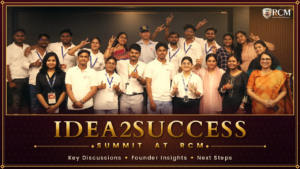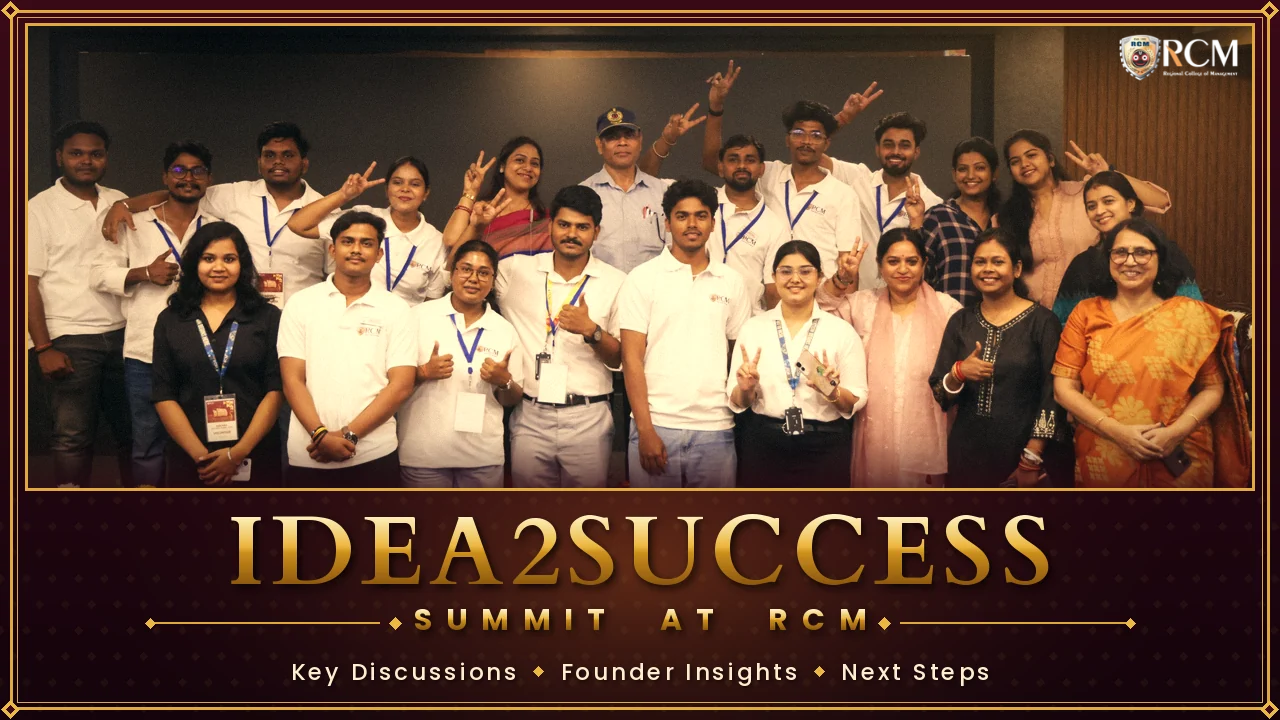
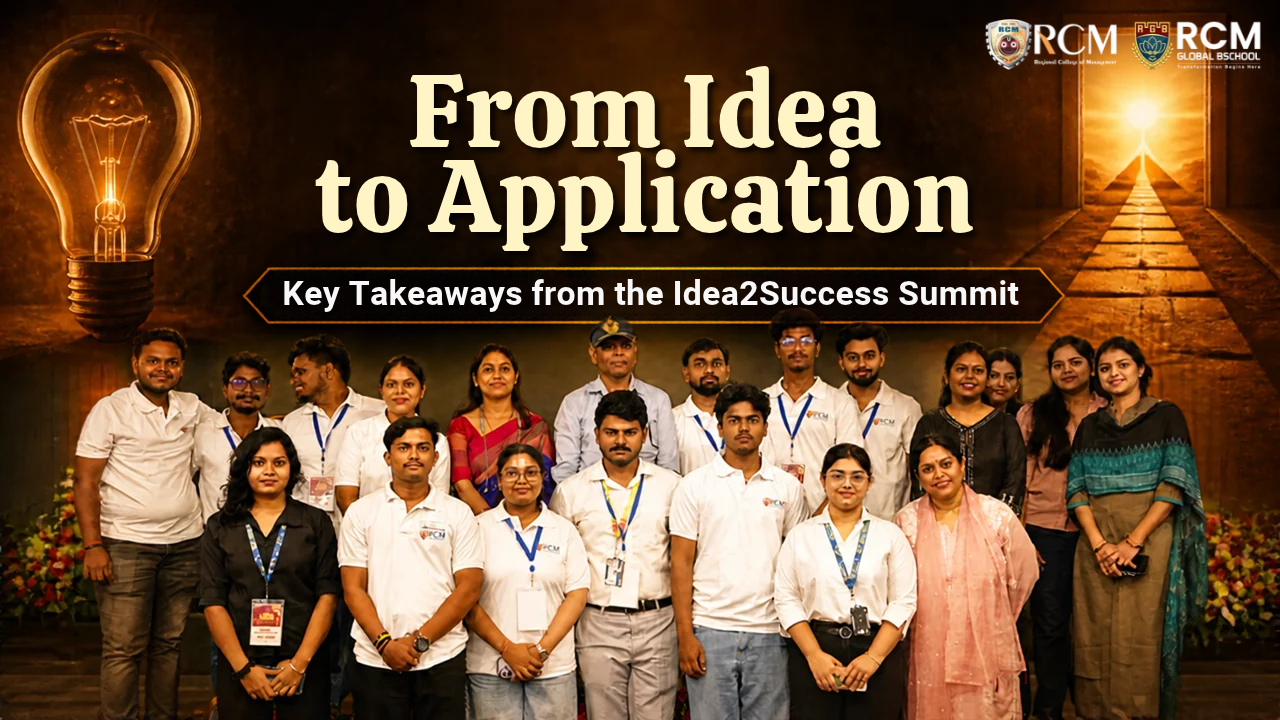
The Idea2Success Summit, part of AA KA MA 2026 at RCM Campus, Bhubaneswar (14–15 November 2026), showed how a business idea becomes an application-ready venture. Its core lessons: screen the idea early, map the right funding, build a clear pitch deck, and keep the paperwork ready before opportunity arrives.
Every founder knows the gap. On one side sits a promising idea scribbled in a notebook. On the other sits an application form, a jury, or an investor who asks for numbers. The distance between the two is where most good ideas quietly stall.
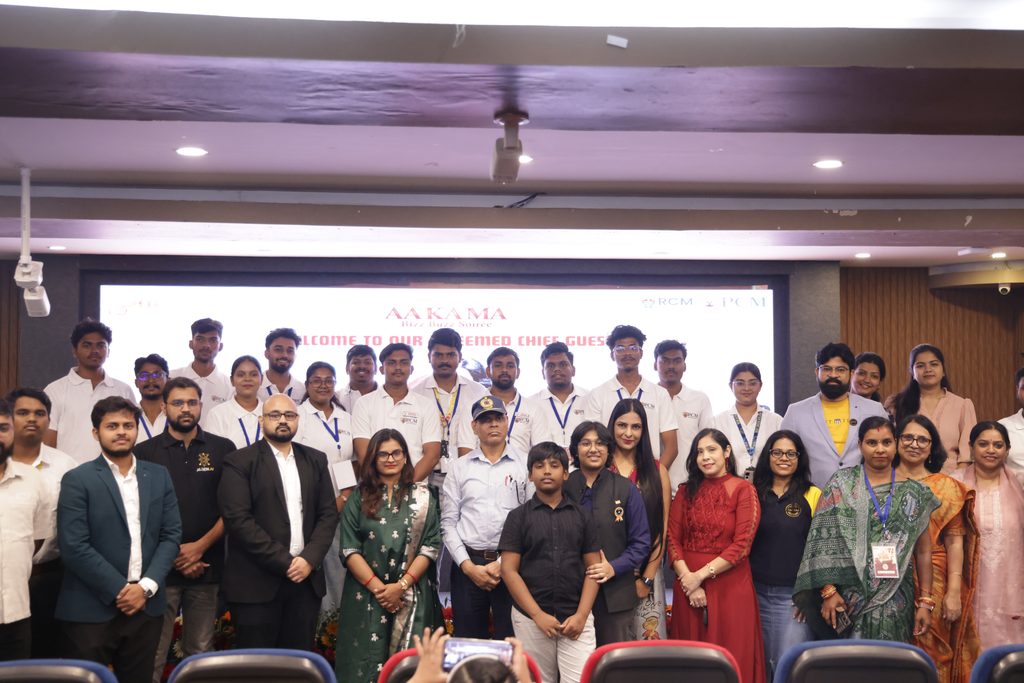
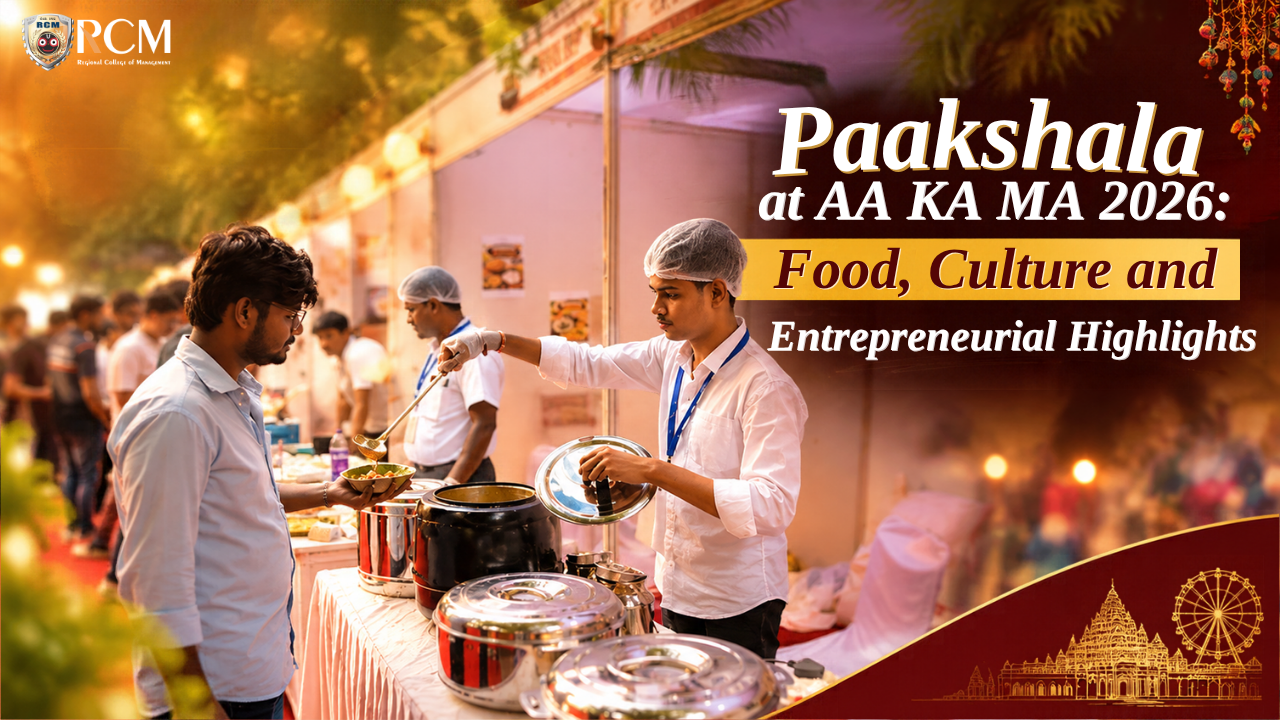
That gap was the subject of the Startup Pitch & Idea2Success Summit at AA KA MA – Bizz Buzz Soirée 2026, hosted at the RCM Campus in Bhubaneswar. Over two days, aspiring entrepreneurs, student founders and early-stage teams presented before mentors and jury members, while stalls, conversations and networking ran alongside. This article distils the practical takeaways for anyone building an idea in Odisha, whether they were in the room or not.
If you want the full discussion, read our pillar piece, Idea2Success Summit at RCM: Key Discussions, Founder Insights and Next Steps (BA-094). This post is the shorter, action-focused companion.
Table of contents
- What was the Idea2Success Summit at AA KA MA 2026?
- Why AA KA MA is called India’s east coast biggest business carnival
- Takeaway 4: Eligibility and documentation decide how far you travel
- Takeaway 5: Feedback is the real prize
- Takeaway 6: Networking turns introductions into growth support
- The idea-to-application roadmap at a glance
- Who was on the programme
- What students and early founders should do next
- Heritage still has a lesson for founders
- Frequently asked questions
What was the Idea2Success Summit at AA KA MA 2026?
The Idea2Success Summit was the pitch-and-mentorship track of AA KA MA 2026. The official event page describes it as a platform for aspiring entrepreneurs, emerging startups and innovative thinkers to present business concepts before industry experts, mentors and potential investors. In practical terms, it worked as a live classroom for Idea2Success entrepreneur support: a place where an idea is questioned, sharpened and prepared for its next step.
| Question | Answer |
|---|---|
| What | Startup Pitch & Idea2Success Summit, part of AA KA MA – Bizz Buzz Soirée 2026 |
| When | 14–15 November 2026 |
| Where | RCM Campus, Chandrasekharpur, Bhubaneswar, Odisha |
| Who | Aspiring entrepreneurs, student founders, early-stage startups, mentors, jury members and guests |
| Why | To turn promising concepts into actionable ventures through pitching, feedback and networking |
| Organiser | Regional College of Management (RCM), Bhubaneswar |
Why AA KA MA is called India’s east coast biggest business carnival
AA KA MA draws its name and spirit from Odisha’s maritime legacy, the age of the Sadhabas, the merchant-sailors of ancient Kalinga who crossed the seas to trade. The event page frames its vision as connecting that heritage with a new era of enterprise. That is why organisers position it as India’s east coast biggest business carnival: a two-day mix of pitches, entrepreneurial stalls, cultural programmes and networking built around trade, courage and ambition.
The 2026 edition organised its experience into themed zones, including The Captain’s Pitch, Enterprise Harbour, Trade Winds, The Innovation Voyage, The Trade Challenge and Legacy of the Sadhabas. The Idea2Success Summit sat at the centre of this, because every voyage, ancient or modern, begins with a decision to set out.


Takeaway 1: Startup idea screening comes before everything else
The strongest theme across the summit was discipline at the start. Startup idea screening means testing an idea against reality before investing months in it. Does a real customer have this problem? Will they pay to solve it? Can the founder deliver it with the resources available?
Speakers on the programme came from backgrounds that care deeply about this question. Soumya Panda, founder of Simplifoundr, works on validating business ideas and assessing risk before a founder commits. Venkatesh Setty, founder of VCPlus, has experience evaluating startups from the investor side. When both sides of the table ask the same early questions, founders should treat those questions as a checklist, not an interrogation.
A quick screen takes about a week: talk to ten potential customers, write down the three objections you hear most, and estimate your first-year costs honestly. If the idea survives, it deserves a deck. If it does not, you have saved yourself a very expensive lesson.
Takeaway 2: Funding mapping beats funding hunting
Many early founders ask, “Who will fund me?” A better question is, “What does my venture need at this stage, and who funds that?” That shift is what funding mapping is about. A home-based food brand, a software prototype and a manufacturing unit need very different capital and very different partners.
Finance and investment perspectives on the programme, including Krishna Rath of Zenisk Insurance and finvestor.in, reflected how financial planning and investor readiness connect. For founders in Odisha, the public ecosystem is a sensible starting point. Startup India offers recognition and scheme information, Startup Odisha covers state-level support, and SIDBI provides finance information for small enterprises. Always read eligibility rules on the official pages, because schemes change.
One caution: no event can promise funding. A summit opens doors, introduces you to people and sharpens your story. Funding decisions depend on the venture, the numbers and the investor’s own process.
Takeaway 3: Pitch deck support turns a story into a decision
A pitch deck is not a brochure. It is a short argument that helps a stranger decide whether to spend more time with you. The agenda gave this plenty of room: pitch presentations ran across three sessions on Day 1 and a final session on Day 2, followed by jury interaction and feedback.
Founders who prepare well tend to follow the same simple structure. If you are building your first deck, our guide to what investors look for in a startup pitch explains each slide in more detail.
| Deck section | Question it answers | Common mistake |
|---|---|---|
| Problem | Why does this matter to a real customer? | Describing a problem only the founder feels |
| Solution | What exactly do you offer? | Listing features instead of benefits |
| Market | Who will buy, and how many? | Claiming “everyone” as the customer |
| Business model | How does money come in? | Leaving pricing vague |
| Traction | What proof exists today? | Hiding early, small results |
| Team | Why you? | Skipping skills gaps and how you will fill them |
| The ask | What do you need, and for what? | Asking without a use of funds |
Takeaway 4: Eligibility and documentation decide how far you travel
An idea becomes an application only when the paperwork is ready. Programmes, grants, incubators and loan schemes each have eligibility conditions, and missing a single document can delay a promising venture by weeks.
Build a simple founder folder before you need it: business registration or Udyam details where relevant, identity and address proof, a one-page business summary, a basic financial projection, and your pitch deck in PDF form. Keep a short note on what each scheme asks for. Treat it like a passport: you do not apply for a visa without it.
The same habit helps small business owners who visited the entrepreneurial stalls. If you are preparing to sell at a fair or exhibition, our piece on how small businesses can prepare for their first exhibition stall follows the same preparation logic.
Takeaway 5: Feedback is the real prize
Winning matters, but the agenda reveals something quieter. Each pitch day closed with jury interaction and feedback, and Day 2 opened time for entrepreneurs to speak directly with jury members before final evaluation. Founders who treated that feedback as a free consulting session left with more than those who only chased recognition.
Write down every question the jury asked. Repeated questions point to gaps in your deck or your model. Fix those, and your next pitch will be stronger regardless of the earlier result.
Takeaway 6: Networking turns introductions into growth support
Stalls ran in parallel with pitches, and evenings were reserved for visitor engagement and networking. This matters because growth support rarely arrives from one big meeting. It builds through follow-ups: a mentor who forwards your deck, a fellow founder who recommends a supplier, a customer who becomes a repeat buyer.
K. Ajay Kumar of XBandGlobal, whose work focuses on international business expansion, represents the next stage many founders think about once the home market works. For a deeper look at building those relationships, see startup networking in Bhubaneswar.
The idea-to-application roadmap at a glance
| Stage | What to do | Output |
|---|---|---|
| 1. Screen | Test demand, risk and feasibility with real customers | A validated one-page idea summary |
| 2. Shape | Define model, pricing and first-year costs | Simple financial projection |
| 3. Map | Match stage and needs to grants, loans, angels or investors | A shortlist of suitable funding sources |
| 4. Prepare | Build the deck and gather documents | Pitch deck and founder folder |
| 5. Pitch | Present, collect jury and mentor feedback | A list of improvements |
| 6. Apply | Submit to schemes, incubators or investors | Completed applications |
| 7. Grow | Follow up, network, iterate | Mentors, customers and partners |
Who was on the programme
The official page lists a chief guest and a panel of speakers from entrepreneurship, finance, technology, venture capital and academia. The table below summarises them as published on the AA KA MA 2026 page.
| Name | Role as listed | Area |
|---|---|---|
| Smt. Aparajita Sarangi | Hon’ble Member of Parliament, Lok Sabha (Chief Guest) | Governance and public service |
| Soumya Panda | Founder & Corporate Founder Coach, Simplifoundr | Idea validation, startup ecosystem |
| K. Ajay Kumar | Founder, XBandGlobal | International business expansion |
| Krishna Rath | Founder & CFO, Zenisk Insurance; founder, finvestor.in | Investment advisory, FinTech |
| Venkatesh Setty | Founder, VCPlus | Venture capital, angel investing |
| Srustijeet Mishra | Strategic M&A Advisor; Founder, ActionLab 2050 Foundation | Mentoring, technology, M&A |
| Mohar Mishra | CTO & Co-Founder, Inovaaare Corporation | Technology leadership |
| Prof. Maheswar Satpathy | Professor, Utkal University | Public policy and health |
Source: official AA KA MA 2026 page, rcm.ac.in. For the full agenda, see AA KA MA 2026 Agenda: Day-Wise Programme, Pitch Sessions and Activities.
What students and early founders should do next
Events end, but momentum does not have to. In the week after any summit, do three things. First, send thank-you notes to two or three people who gave you useful time. Second, turn the feedback you received into a written list and fix the top three issues. Third, set a date for your next pitch, application or customer test.
For students, the learning goes beyond business plans. Managing a pitch, a stall or a team under real conditions builds judgement that lectures cannot. Read how students learn by managing a live business stall, and why student entrepreneurship in India often starts small and grows through practice.
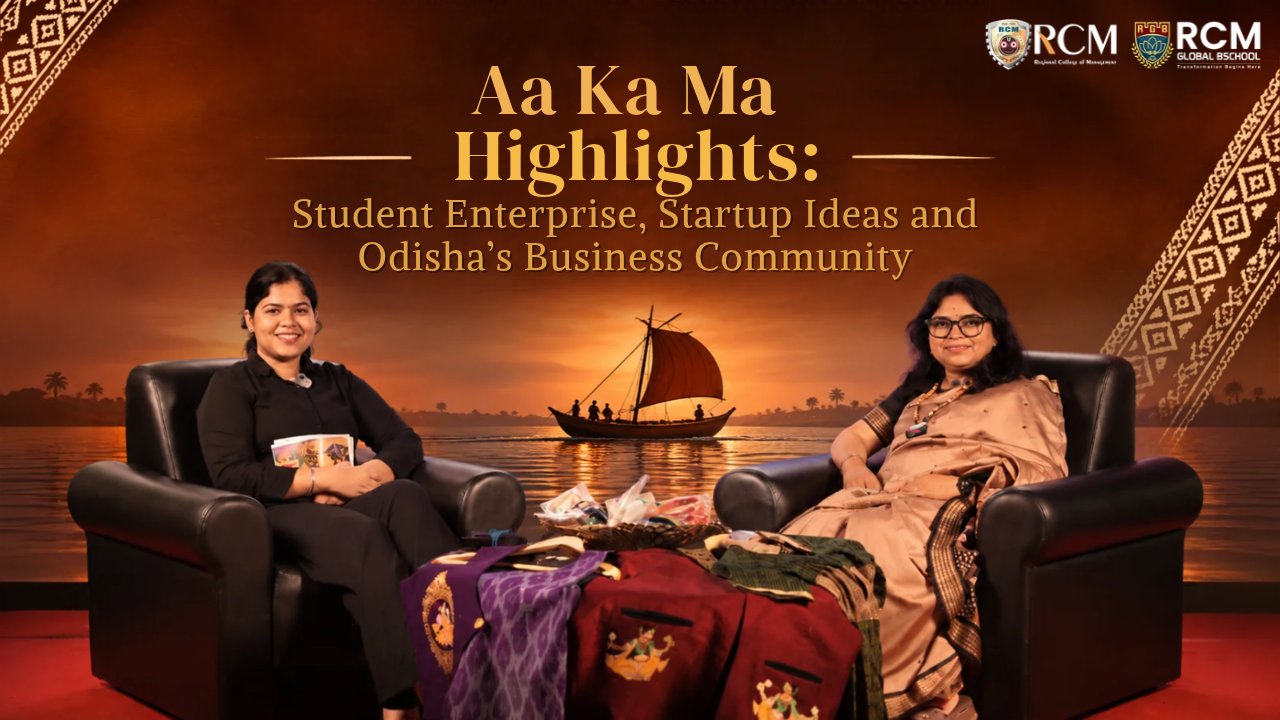
For the wider picture of what the two days delivered, including student enterprise, startup ideas and Odisha’s business community, continue to AA KA MA 2026 Highlights: Student Enterprise, Startup Ideas and Odisha’s Business Community (BA-100).
Heritage still has a lesson for founders
There is a reason an event about modern startups is named after an ancient maritime festival. The Sadhabas did not sail on instinct alone. They studied winds, planned routes, built relationships at distant ports and carried goods people actually wanted. Idea screening, funding mapping, pitch preparation and networking are today’s version of the same craft. Bhubaneswar and Odisha have always understood trade. The Idea2Success Summit simply gave the next generation a harbour to practise in.
Frequently asked questions
It is structured help that guides a founder from raw idea to screening, pitch preparation and application.
It was part of AA KA MA 2026 at RCM Campus, Bhubaneswar, on 14–15 November 2026.
It tests demand, risk and feasibility early, before time and money are committed.
It matches a venture’s stage and needs to suitable sources such as grants, loans, angels or investors.
Problem, solution, market, business model, traction, team and a clear ask.
Yes, student founders and aspiring entrepreneurs can pitch, visit stalls and learn from mentors.
Build your own idea-to-application journey at RCM
The habits you saw at the summit, such as testing ideas, pitching clearly and working with real businesses, sit at the heart of management education at Regional College of Management, Bhubaneswar.
- MBA+ – Industry-Integrated Management Program
- PGDM+ – AI-Integrated PGDM Program at RCM
- BCA+ – Best BCA College in Odisha
Admissions open. Explore programmes, fees and scholarships, or speak to the admissions team on +91 9090080801 (toll free).
Apply NowFacts in this article are drawn from the official AA KA MA 2026 page at rcm.ac.in. Funding, scheme and eligibility details change, so confirm them on the official sites linked above before applying.