
Ask any founder about the first time they sold something to a stranger, and you will usually get a smile before you get an answer. Nobody forgets that moment: the nervous pause before quoting a price, the customer who walks away, the one who comes back.
That is the quiet power of a live business stall. As AA KA MA – Bizz Buzz Soirée 2026 approaches at the Regional College of Management (RCM) in Bhubaneswar on 14 and 15 November 2026, it is worth asking a simple question: what do students actually learn when they run a stall instead of just reading about one?
What do students learn by managing a live business stall? They learn pricing, inventory planning, customer service, cash handling and teamwork by doing real business in real time. A stall turns classroom theory into measurable results and instant customer feedback. AA KA MA 2026, hosted by RCM Bhubaneswar on 14–15 November, features entrepreneurial stalls alongside startup pitches.
Table of contents
- Why Does a Live Business Stall Teach More Than a Textbook?
- What Are the Key Skills Students Learn From Running a Stall?
- How Do Stall Skills Map to Management Subjects?
- What Mistakes Do First-Time Stall Teams Make?
- How Can a Student Prepare a Business Stall? A Simple Checklist
- How Does AA KA MA 2026 Connect With Live Business Learning?
- Why Does Heritage Matter to a Business Event in Odisha?
- How Does Management Education at RCM Support Practical Learning?
- What Can Visitors Learn From a Student Stall?
- Frequently Asked Questions
Why Does a Live Business Stall Teach More Than a Textbook?
A case study has an answer at the back. A stall does not. When you manage a real stall, the customer is the examiner, and the verdict arrives within minutes. Either people buy, or they do not.
That is why experiential learning in management education keeps gaining ground in Indian business schools. Students stop treating marketing, finance and operations as separate subjects, because at a stall they all happen at once. Someone is greeting a buyer, someone is counting change, and someone is wondering whether the stock will last until evening.
There is another difference that matters. In a classroom, a wrong answer costs a few marks. At a stall, a wrong decision costs real money, and the team feels it together. That shared stake changes how seriously students plan, how carefully they listen and how quickly they adapt.
| Factor | Classroom case study | Live business stall |
|---|---|---|
| Feedback | Comes days later, as marks or comments | Comes in minutes, as a sale or a lost sale |
| Risk | No money at stake | Real cost, real revenue |
| Decisions | Made on paper, one subject at a time | Made on the spot, across pricing, stock and people |
| Customer | Imaginary or described in text | A real person with real objections |
| Teamwork | Group assignment, uneven effort | Everyone is visible and the team depends on each role |
| Memory | Fades after the exam | Stays, because it was lived |
What Are the Key Skills Students Learn From Running a Stall?
1. Pricing: the first real lesson
Almost every first-time stall team makes the same mistake: they price by guesswork or by fear. Too low, and the stall is busy but loses money. Too high, and the display is admired but nothing sells.
Managing a stall teaches students to work out their cost per unit, add a sensible margin, and compare with what customers might pay. It is a small lesson in business economics, and it sticks because the money is real.
Here is a simple illustration. Suppose a team makes snack packets. The ingredients cost ₹30 per packet and the packaging adds ₹5. The real cost is therefore ₹35, not ₹30. Selling at ₹50 leaves a margin of ₹15 per packet. Selling 100 packets gives ₹1,500 in margin, from which the team still has to cover any stall charges and transport.
| Item | Amount per packet | What students learn |
|---|---|---|
| Ingredient cost | ₹30 | Direct cost is only part of the picture |
| Packaging | ₹5 | Hidden costs shrink the margin |
| Total unit cost | ₹35 | The true break-even starting point |
| Selling price | ₹50 | Price should reflect value, not fear |
| Margin per packet | ₹15 | Margin pays for everything else |
| Margin on 100 packets | ₹1,500 | Volume and margin work together |
2. Inventory: how much is enough?
Stock too little and you turn customers away. Stock too much and you carry the loss home. Inventory planning forces students to estimate demand, think about peak hours and decide what to restock first.
These are the same questions that run through every retail and supply chain job, just on a smaller scale. A team that keeps a small reserve for the busiest hours, and restocks the fastest-selling item first, is already thinking like an operations manager.
3. Cash handling and billing: where small mistakes add up
A stall stays healthy only when its billing system is decided in advance. Students learn that one person should handle payments, that change must be ready before the first customer arrives, and that cash and UPI collections should be recorded separately.
At the end of the day, matching the sales record with the cash box and the UPI statement is one of the most practical accounting lessons a student can get. It shows how a small slip, such as a wrong change or an unrecorded sale, can quietly eat into the margin. It also builds the habit of honest record keeping, which every finance role depends on.
4. Customer service: reading the person in front of you
A stall is a face-to-face business. Students learn to greet people without pushing, explain a product in one or two sentences, handle objections politely and recover when a customer is unhappy.
No lecture teaches tone of voice as quickly as a customer who says, “I will think about it.” Students begin to notice who wants a quick answer, who wants a story and who simply wants to look around. That reading of people is the heart of good customer service skills.
5. Teamwork and role clarity
Who talks to customers, handles payments, and keeps the display tidy? Teams that assign roles early work smoothly, while those without clear responsibilities may spend the first hour getting in each other’s way.
Students come away understanding delegation, communication under pressure and how to support a teammate during a rush. They also learn to swap roles when someone is tired, which is a lesson in flexibility that no group assignment can quite copy.
6. Sales storytelling and promotion
People rarely buy a product. They buy the story behind it: why it was made, who it is for, what problem it solves. Stall managers learn to turn features into a short, honest pitch, which is a skill that later carries into interviews, internships and startup presentations.
Simple promotion tools work well at a stall: a clear signboard, a tidy display, a small sample, a bundle offer or a hand-written price card. Students see for themselves which of these actually brings people to the counter.
7. Resilience
Not every hour is a good hour. A slow stretch, a mistake in change or an unsold batch teaches students to stay calm, review and adjust. Many entrepreneurs say resilience was the lesson they needed most, and the one that was hardest to teach in a classroom.
How Do Stall Skills Map to Management Subjects?
One of the best things about a live stall is that it connects subjects that are usually taught separately. The table below shows how a single day at a stall touches the core areas of a management programme.
| Stall activity | Skill learned | Management subject |
|---|---|---|
| Fixing the price | Costing and margin | Finance and managerial economics |
| Deciding how much stock to bring | Demand estimation | Operations and supply chain |
| Talking to a hesitant buyer | Persuasion and service | Marketing and sales |
| Dividing roles in the team | Delegation and coordination | HR and organisational behaviour |
| Matching cash and UPI at closing | Accuracy and accountability | Accounting |
| Telling the product’s story | Branding and pitching | Entrepreneurship and communication |
| Recovering from a slow hour | Adapting under pressure | Leadership |
What Mistakes Do First-Time Stall Teams Make?
Mistakes are part of the lesson, and most teams make the same few. Knowing them in advance helps students make better mistakes, the kind they can learn from quickly.
- Underpricing to attract crowds. A busy stall that earns nothing has learned an expensive lesson about margin.
- Ignoring hidden costs. Packaging, transport and stall charges are easy to forget until the final count.
- Running out of the best seller early. The most popular item often sells out first, so a reserve matters.
- Having no change ready. Delays at the payment counter lose customers faster than any other problem.
- Leaving the display untidy. A stall that looks organised feels trustworthy before a word is spoken.
- Skipping the debrief. Without a review, the team repeats the same mistake at the next event.
How Can a Student Prepare a Business Stall? A Simple Checklist
Preparation decides most of what happens on the day. This checklist keeps the planning simple and practical.
- Pick a product with a clear buyer. Know who it is for.
- Starting small is the best way to begin; read more in Student Entrepreneurship in India: How College Students Can Start Small.
- Do the maths first. Cost, price, margin and a realistic sales target.
- Plan stock in rounds. Keep a reserve for peak hours.
- Assign roles. Sales, billing, display and customer engagement.
- Prepare the display. A clear signboard, visible prices and a tidy counter.
- Prepare a 30-second pitch that every team member can deliver.
- Keep change and a UPI option ready before the first customer arrives.
- Track sales hourly so you can adjust during the day.
- Hold a debrief. What sold, what did not, and why?
Tracking sales hourly is the habit that separates a prepared team from a hopeful one. A simple tracker like the one below takes less than a minute to update and shows the team where to adjust.
| Hour | Units sold | Stock left | Cash (₹) | UPI (₹) | Action for next hour |
|---|---|---|---|---|---|
| Hour 1 | 12 | 88 | 350 | 250 | Move signboard closer to the walkway |
| Hour 2 | 25 | 63 | 700 | 550 | Keep a bundle offer ready for the rush |
| Hour 3 | 18 | 45 | 500 | 400 | Restock the best seller first |
How Does AA KA MA 2026 Connect With Live Business Learning?
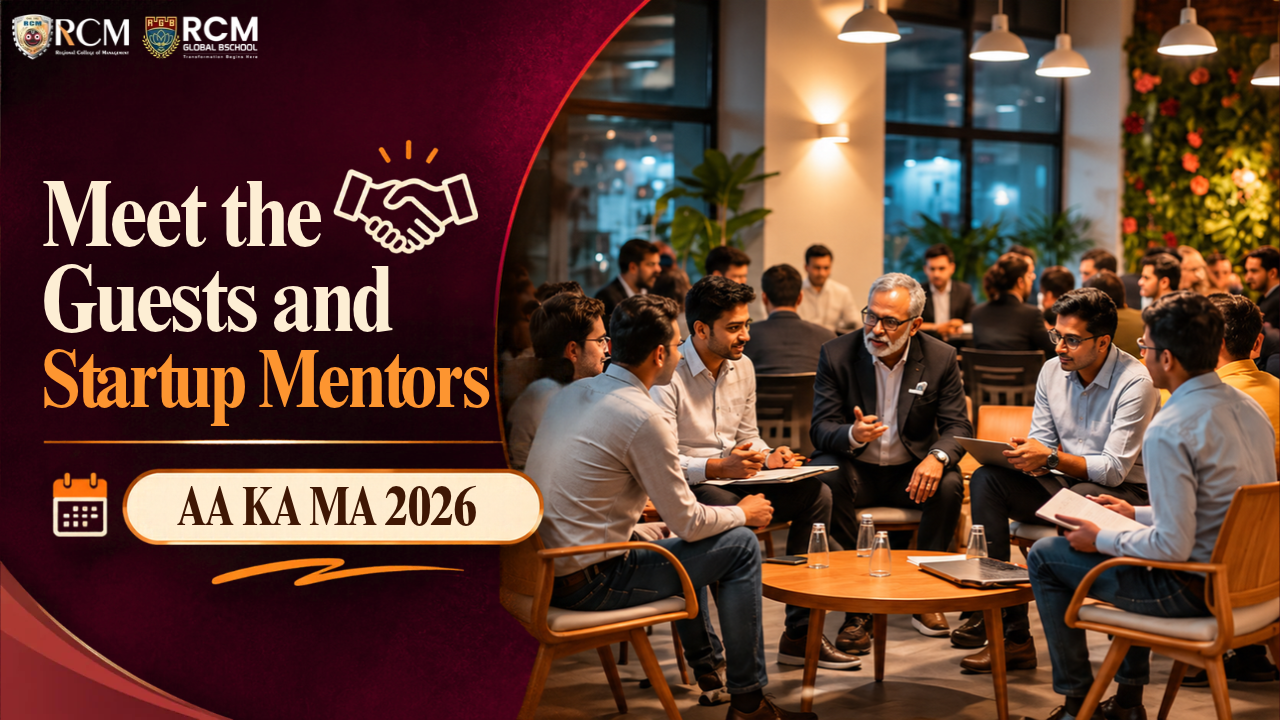
AA KA MA is built on the belief that entrepreneurship should leave the classroom and meet the real world. The two-day event brings together entrepreneurial stalls, startup pitch presentations, networking and a cultural programme, which makes it a natural setting for this kind of learning. You can read the full event overview in our guide to the Business Carnival in Bhubaneswar 2026.
The official page also describes activities such as The Captain’s Pitch, Enterprise Harbour, Trade Winds, The Innovation Voyage, The Trade Challenge and Legacy of the Sadhabas as part of the entrepreneurship and leadership experience. If you are planning a visit, our AA KA MA 2026: Dates, Timings, Venue, Highlights and Visitor Guide explains what to expect.
Stalls and pitches also complement each other. A student who has sold a product across a counter finds it easier to pitch an idea to a panel, because the same questions come up: who is the customer, what does it cost, and why would anyone choose this? If you want to see how that second stage works, read about the Startup Pitch Competition at AA KA MA 2026.
Registration and event information
If you are a founder, student innovator, entrepreneur or business professional interested in attending or exploring participation, review the official event details and the relevant registration category before proceeding.
Explore AA KA MA – Bizz Buzz Soirée 2026
Register for AA KA MA 2026
View the supplied AA KA MA 2026 Facebook poster/carousel
Why Does Heritage Matter to a Business Event in Odisha?
Odisha has a long memory of enterprise. The Sadhabas, the seafaring traders remembered in local tradition, sailed out in boitas to trade across the seas, and the story is still honoured every year around Kartika Purnima. You can explore this history in Sadhabas and Boitas: Odisha’s Maritime Heritage.
AA KA MA draws inspiration from that spirit of trade and courage, and gives it a modern shape through student-led business activity. It is a separate RCM initiative and does not replace or represent the traditional festival, a distinction explained in Bali Jatra vs AA KA MA 2026.
How Does Management Education at RCM Support Practical Learning?
Regional College of Management, established in 1982, positions itself around learning that goes beyond lectures. Programmes such as BBA+, MBA+ and PGDM+ connect management study with exposure to business operations, networking and live projects. Events like AA KA MA give that approach a visible, hands-on stage.
If you are a student exploring where to study management in Bhubaneswar, take a look at the full list of RCM programmes, the fee structure and available scholarships. When you are ready, you can read about admissions or apply now. You can also learn more about student activities at RCM.
What Can Visitors Learn From a Student Stall?
Visitors who walk through the stalls can do more than shop. Ask the people behind a stall how they set their price, what sold fastest and what they would change next time. Those honest answers are often more useful than any presentation.
For aspiring entrepreneurs in the crowd, a stall is also a free market study. Watch which displays draw people in, which prices cause hesitation and which pitches make a buyer smile. A few minutes of careful observation can teach as much as a week of reading.
Key takeaways
- A live stall gives instant, honest feedback that a classroom cannot.
- Pricing, inventory, cash handling, service and teamwork all happen together.
- Most first-time mistakes come from underpricing, poor stock planning and weak role clarity.
- A simple hourly tracker and an end-of-day debrief turn mistakes into lessons.
- AA KA MA 2026 at RCM Bhubaneswar gives students a real stage for this kind of learning.
Frequently Asked Questions
It is learning by doing. Students plan, price, stock, promote and sell a product at a real stall, handling real customers and real money instead of a case study.
A stall compresses the core of running a business into a few hours: pricing, inventory, customer service and teamwork, with instant feedback from buyers.
Choose a product, understand the audience, set a price, plan stock, assign roles, prepare the display and review results afterwards.
Underpricing, running out of stock, handling busy periods and keeping the team coordinated are the most common ones. They are also where the learning happens.
AA KA MA – Bizz Buzz Soirée 2026 features entrepreneurial stalls, startup pitches and networking at RCM Campus, Chandrasekharpur, Bhubaneswar, on 14–15 November 2026.
No. Taking part in a pitch or meeting investors does not guarantee investment. Any funding is subject to the applicable assessment, eligibility and terms.