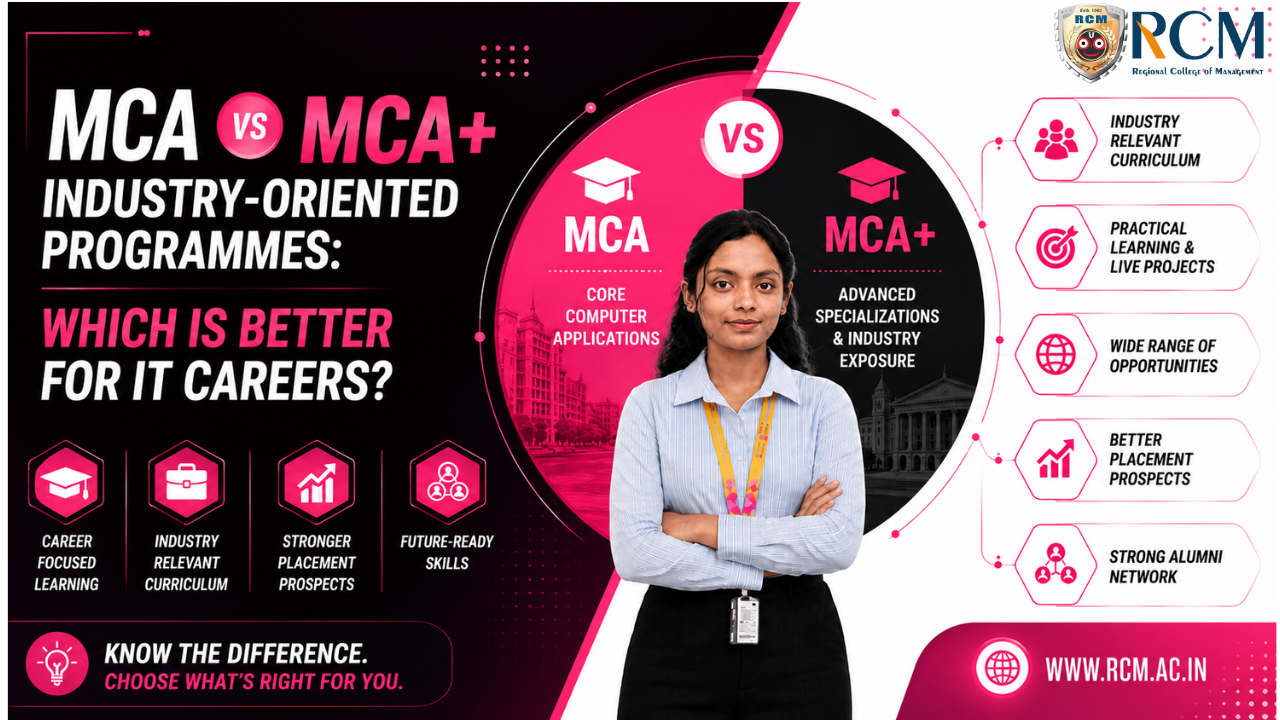
Regional College of Management (RCM), Bhubaneswar, offers an MCA+ programme that integrates core computer applications with specializations in AI, Data Science, Cybersecurity, and Full Stack Development, supported by live projects, corporate mentoring, and a 98.7% placement rate. Institutions such as Online Manipal and IIMT University also offer industry-oriented MCA programmes, each with distinct delivery formats and specialization options.
Table of contents
Understanding Traditional MCA and Industry-Oriented MCA+
The Master of Computer Applications (MCA) has long been a cornerstone postgraduate degree for students pursuing careers in software development and IT. However, the technology landscape has evolved significantly, and so have the expectations of employers. This has given rise to two distinct programme models: the traditional MCA and the industry-oriented MCA+.
A traditional MCA typically follows a standard university curriculum focused on core computer science subjects. These programmes emphasize theoretical foundations, programming languages, database management, operating systems, and software engineering. The curriculum is often fixed, with limited flexibility for students to specialize in emerging technology domains.
An industry-oriented MCA+, by contrast, builds on the core MCA foundation but adds specialization tracks, industry certifications, and practical exposure. These programmes are designed to bridge the gap between academic knowledge and industry requirements. Students can choose from specializations like Artificial Intelligence, Data Science, Cybersecurity, Cloud Computing, or Full Stack Development, which are integrated directly into the curriculum.
Curriculum Comparison
The curriculum is where the most significant differences between traditional MCA and industry-oriented MCA+ programmes emerge.
Core Computer Science
Both programme types cover fundamental computer science subjects. A traditional MCA typically includes:
- Programming languages (Java, Python, C++)
- Database Management Systems
- Operating Systems
- Computer Networks
- Data Structures and Algorithms
- Software Engineering
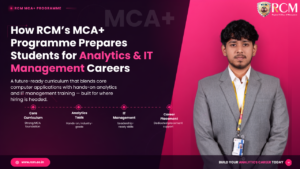
An industry-oriented MCA+ programme covers these same fundamentals but often with a more applied approach. For instance, RCM’s MCA+ programme combines theoretical and practical expertise, providing a gateway to today’s IT world through hands-on assignments and projects.
Emerging Technologies
This is where industry-oriented MCA+ programmes distinguish themselves. While traditional MCA programmes may offer electives in emerging technologies, industry-oriented programmes integrate them into the core curriculum. Students gain exposure to:
- Artificial Intelligence and Machine Learning
- Data Science and Business Intelligence
- Cloud Computing
- Cyber Security
- Full Stack Development
Practical Learning
Industry-oriented MCA+ programmes emphasize practical learning through lab sessions, workshops, and real-world projects. Traditional MCA programmes typically focus more on theoretical understanding, with lab work serving as a supporting element rather than a primary focus.
Industry Exposure
Industry-oriented MCA+ programmes incorporate regular interactions with industry professionals, guest lectures, corporate mentoring, and industrial visits. These are often limited or absent in traditional MCA programmes, which rely primarily on academic faculty for instruction.
Practical Learning and Live Projects
The approach to practical learning represents one of the most significant differences between traditional MCA and industry-oriented MCA+ programmes.
Classroom Learning
Traditional MCA programmes primarily rely on classroom lectures and textbook learning. Students attend theory classes, complete assignments, and take examinations that test theoretical understanding. Laboratory sessions are typically scheduled separately and may not be fully integrated with theory classes.
Industry Projects
Industry-oriented MCA+ programmes incorporate live business projects directly into the curriculum. Students work on real-world problems provided by industry partners, gaining hands-on experience with the same challenges they will face in their careers. For example, RCM’s MCA+ programme includes live projects with companies like Nirmalya Lab, AABSyS IT, and Aashdit.
Capstone Projects
Traditional MCA programmes generally require a final year project, which students complete independently. Industry-oriented MCA+ programmes often structure capstone projects as immersive experiences guided by industry mentors. These projects are designed to demonstrate competence in specific specialization areas.
Internships
While traditional MCA programmes may include internships, they are often optional or unstructured. Industry-oriented MCA+ programmes typically include mandatory, structured internships coordinated through the institution’s placement infrastructure, ensuring students gain meaningful work experience before graduation.
Collaborative Learning
Industry-oriented MCA+ programmes emphasize teamwork and collaborative learning, mirroring the collaborative nature of modern software development. Traditional MCA programmes often focus more on individual achievement and independent work.
Technology Exposure
The range and depth of technology exposure differ significantly between traditional MCA and industry-oriented MCA+ programmes.
Artificial Intelligence & Machine Learning
Traditional MCA programmes may offer AI and ML as elective courses, covering basic concepts and algorithms. Industry-oriented MCA+ programmes with AI & Machine Learning specializations provide comprehensive coverage of Python, machine learning, deep learning, NLP, computer vision, and generative AI. Students learn to build production-grade ML systems and deploy generative AI applications.
Data Science & Business Intelligence
Traditional MCA programmes may introduce data analytics concepts but rarely cover business intelligence tools. Industry-oriented MCA+ programmes with Data Science & Business Intelligence specializations focus on turning complex datasets into actionable business decisions using tools like Power BI and Python analytics libraries.
Cloud Computing
Traditional MCA programmes typically cover cloud computing as a concept without hands-on experience. Industry-oriented MCA+ programmes incorporate cloud computing, deployment pipelines, containerization, CI/CD workflows, and scalable application management directly into the curriculum.
Full Stack Development
Traditional MCA programmes cover web development but often focus on basic HTML, CSS, and JavaScript without modern frameworks. Industry-oriented MCA+ programmes with Full Stack Development specializations cover React, Node.js, MongoDB, and REST APIs—the same stack used in production by most product companies.
Certifications and Skill Development
The approach to certifications and skill development varies widely between programme types.
Industry Certifications
Traditional MCA programmes rarely include industry certifications as part of the curriculum. Students who want certifications must pursue them independently, often after graduation. Industry-oriented MCA+ programmes integrate industry certifications directly into the programme structure. Students earn certifications alongside their academic degree, combining academic recognition with industry-validated credentials.
Soft Skills Development
Traditional MCA programmes typically focus on technical skills, with soft skills development left to students’ initiative. Industry-oriented MCA+ programmes include structured soft skills development, including communication, leadership, and project execution training. RCM’s MCA+ programme , for example, includes a Pre-Placement Readiness program with 162 sessions covering Business English, Group Discussion, Psychometric Tests, and Mock Interviews.
Career Opportunities
Both programme types prepare students for careers in IT, but the range and level of opportunities differ.
Traditional MCA Career Pathways
Graduates of traditional MCA programmes typically pursue roles such as:
- Software Developer: Building applications using programming languages and frameworks learned in the programme
- Systems Analyst: Analyzing and designing information systems for organizations
- Database Administrator: Managing and maintaining database systems
- Network Administrator: Managing computer networks and infrastructure
- IT Support Specialist: Providing technical support to organizations
Industry-Oriented MCA+ Career Pathways
- Graduates of industry-oriented MCA+ programmes can pursue more specialized roles:
- Project Manager: Leading technology projects and teams
- AI Engineer: Building and deploying AI and ML systems
- Data Scientist: Analyzing complex datasets to derive business insights
- Cybersecurity Analyst: Protecting organizational systems from security threats
- Cloud Engineer: Designing and managing cloud infrastructure
- Full Stack Developer: Building complete web applications
- Business Intelligence Analyst: Using data visualization tools to drive business decisions
- IT Consultant: Advising organizations on technology strategy
Which Students Should Choose Traditional MCA?
A traditional MCA programme may be the right choice for students who:
- Prefer a Theory-Focused Education: Students who enjoy academic study and theoretical understanding over hands-on application may find traditional MCA programmes more comfortable.
- Plan to Pursue Research or Academia: Students interested in research, teaching, or pursuing a PhD may benefit from the theoretical depth of traditional programmes.
- Have Limited Financial Resources: Traditional MCA programmes are often less expensive than industry-oriented programmes with built-in certifications and specializations.
- Are Uncertain About Career Direction: Students who haven’t decided on a specific technology career path may prefer a broader, less specialized programme.
- Live in Areas with Limited Options: Students who cannot relocate to institutions offering industry-oriented programmes may find traditional MCA programmes more accessible.
- Are Self-Motivated Learners: Students who are comfortable learning new technologies independently may not need the structured exposure offered by industry-oriented programmes.
Who Should Choose an Industry-Oriented MCA+?
An industry-oriented MCA+ programme is typically a better fit for students who:
- Want Immediate Job Readiness: Students who want to start their careers with minimal additional training benefit from the practical focus of industry-oriented programmes.
- Have Specific Career Goals: Students who have identified a particular technology domain (AI, Data Science, Cybersecurity, etc.) benefit from specialized curriculum.
- Value Practical Experience: Students who learn best through doing, rather than through theory, thrive in programmes with live projects and internships.
- Want to Build a Portfolio: Industry-oriented programmes provide opportunities to build portfolio-ready projects that demonstrate competence to employers.
- Seek Networking Opportunities: Students who want to build professional networks through industry interactions, corporate mentoring, and placement events.
- Prefer Structured Career Support: Students who want dedicated placement preparation and support benefit from the structured career services in industry-oriented programmes.
- Can Commit to Full-Time Study: Many industry-oriented programmes require full-time, on-campus attendance to maximize hands-on learning and industry exposure.
RCM’s MCA+ programme offers a comprehensive example of an industry-oriented approach, with specializations in AI & Machine Learning , Data Science & Business Intelligence , Full Stack Development , and Cyber Security . The programme combines core computer applications with industry certifications, live projects, corporate mentoring, and placement preparation, all within a two-year full-time format.
Final Verdict
The choice between a traditional MCA and an industry-oriented MCA+ programme depends on your individual career goals, learning style, and circumstances.
Choose a traditional MCA if:
- You prefer theoretical depth over practical application
- You plan to pursue research or a PhD
- You are confident in your ability to learn industry skills independently
- You have budget constraints
Choose an industry-oriented MCA+ if:
- You want to enter the workforce immediately after graduation
- You have clear career goals in specific technology domains
- You value practical learning and hands-on experience
- You want structured placement preparation and support
Both programme types are AICTE-approved MCA programmes and UGC-recognized universities when offered by accredited institutions. The quality of education, employability, and career outcomes depend significantly on the institution, faculty, and individual student effort, rather than the programme type alone. Prospective students can also consult NIRF Engineering Rankings and the National e-Governance Division (MeitY) for additional context on institutional quality and industry alignment.
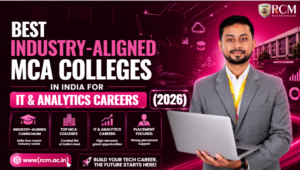
For students who can commit to full-time study and want the strongest possible preparation for technology careers, industry-oriented MCA+ programmes offer clear advantages through specialization, practical exposure, and structured career support. To explore a comprehensive comparison of leading programmes, read our guide on the best industry-aligned MCA colleges in India for IT and analytics careers .
For more details on specific programmes, explore RCM’s MCA programme page, review placements outcomes, experience student life , or check admissions information.