How senior leaders from Microsoft, Amazon, Razorpay, KPMG, L&T & Axis Bank lead without positional power — and what it means for you.
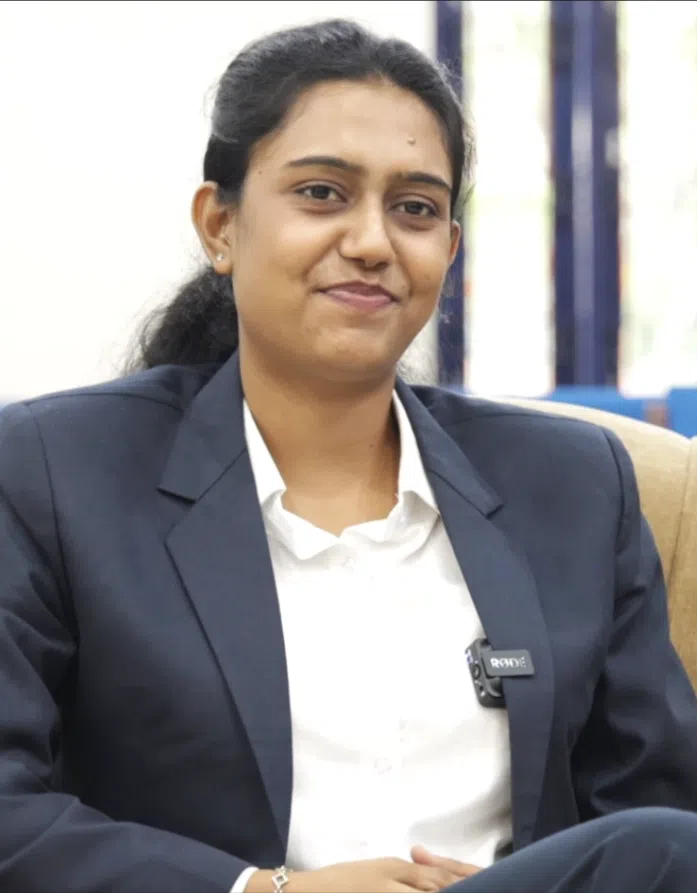
Distinguished Panelists – Dr. Anil Bajpai (Group Director, Prestige Institute of Management & Research). Sumit Premi(Senior Director & Global Talent Acquisition Razorpay). Sonia Sahgal Asia leader – (Global Talent Acquisition, Microsoft). Indrajeet Chatterje (Director & India Leader, RSM US LLP). Archana Grover(Global Head, Standard Chartered Bank). Arun Prasad Keshri (Vice President,EXL), Himanshu Ojha · Arshiya Singh (Director, Boston Consulting Group).
What is Influencing Without Authority?
Influencing without authority is the ability to drive outcomes, build coalitions, and inspire commitment in situations where formal positional power does not exist. It occurs in matrix organizations, cross-functional teams, project-based structures, and any collaborative environment where results depend on people who do not report to you. The core mechanism is trust — earned through credibility, consistency, empathy, and shared purpose — rather than command. Leaders who master this skill are statistically 5× more likely to advance quickly (Center for Creative Leadership) and drive 70% higher project success rates compared to those who rely on authority alone.
In This Article
- Why Authority-Based Leadership Is Running Out of Road
- Building Trust Without a Reporting Line
- Communicating with Influence
- Creating Shared Ownership Across Teams
- Leadership Frameworks: From Insight to Action
- Industry 5.0: Why These Skills Are Now Non-Negotiable
- For MBA, BBA, MCA, BCA, and PGDM Students
- RCM’s Leadership Philosophy: Industry-Connected and Future-Ready
- Frequently Asked Questions
Picture this: you are the project lead on a critical AI transformation initiative. The budget is yours. The deadline is yours. The accountability is entirely yours. But the people you actually need — technology architects, legal analysts, operations managers, HR specialists — report to entirely different heads, carry different KPIs, and have no organizational reason to prioritize your initiative over their own. This is where influencing without authority becomes your most critical leadership capability — the ability to align stakeholders, build trust, and mobilize action even when you don’t control reporting lines, rewards, or performance reviews.
This is not a hypothetical scenario — this is Tuesday morning in virtually every major organization in India and across the world.
The question at the heart of modern leadership is deceptively simple: How do you get things done when the people you need most don’t report to you? This is the challenge of influencing without authority — and in the era of matrix organizations, distributed teams, AI-led transformation, and Industry 5.0, it has gone from a useful leadership skill to an unavoidable organizational reality.
According to the Center for Creative Leadership, influencing without authority is now the single most cited predictor of executive advancement. McKinsey research shows professionals spend upward of 80 percent of their working time collaborating with people outside their direct reporting lines.
On 21 February 2026, seven senior practitioners from Microsoft, Amazon, Razorpay, KPMG, L&T, and Axis Bank gathered at the Ashwamedha 2026 Global Leadership Conclave at Regional College of Management (RCM), Bhubaneswar to answer exactly this question — not theoretically, but through unfiltered, direct professional experience. What follows is a full synthesis of that conversation.
The traditional model of leadership — authority flows from title, compliance follows from hierarchy — was built for a world that no longer exists. Three structural shifts have made it increasingly obsolete across sectors.
Why Authority-Based Leadership Is Running Out of Road
Organizational flattening has compressed hierarchies across industries. Fewer people hold positional authority over others, yet coordination requirements have increased, not decreased. As a result, leadership today is less about directing downward and more about influencing without authority — managing sideways, aligning peers, and driving outcomes through trust rather than hierarchy.
Matrix and cross-functional structures mean most mid-to-large organizations now operate in project-based configurations where individuals routinely depend on colleagues who report to entirely different functional heads. In such environments, formal authority covers less than half the working surface.
Knowledge-intensive work means that in technology, financial services, consulting, and AI-driven environments, the person with the most relevant expertise is often not the person with the senior title. Organizations need ideas and decisions to flow based on merit, not rank.
“Influence without authority is not a management technique. It is a civilizational truth. The greatest leaders of all time were not those who held power. It was those who held character and conviction strongly.”
— Dr. Anil Bajpai (Group DirectorPrestige Institute of Management & Research), Ashwamedha 2026 Panel 1
Dr. Bajpai grounded this insight in a precise historical example: Lord Krishna in the Mahabharata — a leader who held no formal authority over any army, fought for no throne, and never picked up a weapon — yet not a single strategic decision in the epic moved without his guidance. This is not mythology deployed as ornament. It is a precise description of the operating conditions faced by every cross-functional lead, HR business partner, and transformation officer in every major organization in the world today.
Building Trust Without a Reporting Line
The first challenge in cross-functional leadership is the hardest: how do you build and sustain professional trust with peers who have no organizational obligation to follow your lead?
Start With Their Problem, Not Your Solution
Sumit Premi, drawing from his early days at Razorpay, identified a near-universal failure mode in new leadership situations: the impulse to arrive with answers before understanding the landscape.
“We love giving solutions. We start jumping to solutions. Whenever we join any organization — ‘I will fix this, I will fix it.’ But that’s not how you build trust. That is where you are reinventing the wheel. The first thing is: ask people what they want.”
— Sumit Premi. Ashwamedha 2026 Panel 1
At Razorpay, Premi’s first action when taking over a new function was to approach business leaders with a single question: “Tell me what problem you are facing. I’m not here to reinvent everything.” This act of structured listening — demonstrating that he wasn’t imposing his previous corporate experience — was the precise moment trust-building began.
Research by Gary Yukl at SUNY Albany confirms this: consultation and active listening are among the most effective soft influence approaches precisely because they signal to stakeholders that their perspectives are valued, not merely tolerated.
Build Relationships Before You Need Them
Sonia Sahgal of Microsoft reframed the entire challenge of cross-functional trust: it is not primarily built in the moment of crisis. It is built before.
“You don’t reach out to people in cross-teams when the problem is there. It’s largely a journey you cover when things are going fine. At Microsoft, we have a concept called business forward — how are you sharing the larger goal and aligning to it as different teams?”
— Sonia Sahgal. Ashwamedha 2026 Panel 1
The goal of trust-building, she argued, is not to persuade others to help you with your problem. It is to stitch together a shared goal in which helping you is identical to helping themselves. Once shared purpose is established, collaboration becomes structurally natural.
Psychological Safety: Stop the Green Lies
Himanshu Ojha introduced one of the session’s most important concepts: watermelon reporting — green on the outside, bleeding red within. When people do not feel psychologically safe enough to acknowledge mistakes, flag problems, or challenge direction, they perform rather than communicate. Leaders never get the real picture.
“Trust is not something just soft anymore. It is a hard delivery accelerator. You have to have an aligned autonomy — aligned on the outcome that you’re working on. And once that is established, that is where trust starts.”
— Himanshu Ojha, Ashwamedha 2026 Panel 1
Transformation initiatives fail not because the strategy is wrong but because the information architecture is corrupted by fear. The antidote is psychological safety: the organizational condition in which people can raise issues, make mistakes, and challenge direction without career consequence.
Communicating with Influence
Translate, Don’t Transmit
When you speak to people without positional authority over them, you must translate your goals into their language — not broadcast your priorities in your own vocabulary. Operations teams care about client outcomes. Risk teams care about threat mitigation. Finance teams care about revenue impact. Technology teams care about system integrity.
“When you go to finance, talk in their language. If I tell my finance team ‘I will improve the quality of hire metrics,’ they’ll not understand. You tell them: ‘If you let me hire 20 people, the productivity and revenue of the organization will go up by X.’ When in Rome, be Roman.”
— Dr. Anil Bajpai, Ashwamedha 2026 Panel 1
Influence Has No Minimum Rank
Archana Grover told the session’s most memorable story. She had placed three interns on a major ATS (Applicant Tracking System) implementation project. One intern discovered a critical flaw: keyword search was broken, making the entire system non-functional. Her colleagues discouraged her from raising it — “I’m just a three-month intern, what does it matter?” But what followed was a powerful example of influencing without authority. The intern responded, “Whether I’m getting permanent or not is separate. I have been asked to work on this ATS, and this is the most important thing of my life currently.” She spoke up despite having no formal power. The flaw was fixed. The project succeeded.
“The choice you make at the right time. We keep saying apna time aayega — our time will come. But what we will do when the time comes — no one ever says. That’s your personal choice.”
— Archana Grover (Global Head, Standard Chartered Bank), Ashwamedha 2026 Panel 1
Influence is a choice available from your first day in any organization. It requires no title. It requires decision.
The Corridor Is Where Real Decisions Are Made
Indrajeet Chatterjee joined a management institution where faculty were not talking to each other. His diagnosis: individual chai delivery to each faculty member’s desk was eliminating the only natural occasion for unstructured cross-functional conversation. His intervention: he removed individual chai delivery and placed a table in a corridor — calling it “chai pe charcha“, conversation over tea. Without issuing mandates or restructuring teams, he demonstrated influencing without authority by redesigning an informal ritual that nudged people toward connection, collaboration, and shared dialogue.
“Corridor conversations are the ones which, most of the time, help you in decision-making. Communicating with influence doesn’t always require a meeting room or an agenda. Sometimes it requires a chai table.”
— Indrajeet Chatterjee . Ashwamedha 2026 Panel 1
Organizational behavior research has documented this for decades: informal interaction is disproportionately generative of trust, alignment, and innovation. The corridor is not wasted space. It is the primary site of cross-functional influence.
Creating Shared Ownership Across Teams
Co-Create, Don’t Just Collaborate
“We make a big deal about collaboration. I say: start co-creating. Make them owners of the solution, of the paths that we’re taking. Then you are not asking them to review — you are asking them to be a part of it. They do not feel like outsiders who are reviewing and pointing fingers. They’ve been part of the solution.”
— Himanshu Ojha, Ashwamedha 2026 Panel 1
Collaboration typically involves one function leading and inviting others to review or approve. Co-creation invites others into the design stage — before options are narrowed, before direction is set, before decisions are made. This shift transforms stakeholders from external reviewers into internal owners.
Design Shared Accountability From Day One
“The first thing is to get away from the blame game. Business will say HR’s not good, HR will say business. When you get into a meeting, start with ‘How do we solve for this?’ Quality of hiring is not HR’s problem or business’s problem. It’s a shared problem. That’s the trust building.”
— Sumit Premi, Ashwamedha 2026 Panel 1
The blame game is a structural consequence of misaligned incentives, not a cultural flaw. When two functions own different parts of an outcome, each has a rational incentive to attribute failures to the other’s half. The solution is to deliberately design shared accountability before something goes wrong — not negotiate it after.
Require Ideas, Not Just Problems
“I made rules for meetings: don’t come to a meeting with a problem if you don’t have a suggestion. Everybody would come with a problem written on paper and at least one idea — maybe a silly idea, but at least they were contributing. And in that manner, they believed he is more of a fool than me — which is exactly what you want.”
— Dr. Anily Bajpai, Ashwamedha 2026 Panel 1
By requiring everyone to arrive with both a problem and at least one idea, Dr. Bajpai transformed the meeting from a blame-attribution exercise into a co-creation environment. The psychological effect dissolves status anxiety and makes every voice a contributing voice.
Leadership Frameworks: From Insight to Action
Framework 1 — The TALE Model of Cross-Functional Trust
Synthesized from panel insights, the TALE model describes four sequential stages of trust-building in cross-functional environments:
TALE Model — Cross-Functional Trust
| Stage | Component | Panel Source | Actionable Behaviour |
|---|---|---|---|
| T | Translate — Understand their goals and metrics first | Bajpai / Premi | Ask “What problem are you facing?” before proposing solutions |
| A | Align — Establish shared outcome before starting | Sahgal / Ojha | Define the shared goal explicitly. Use “our project,” never “my project.” |
| L | Listen Continuously — Trust is built in good times | Sahgal / Chatterjee | Hold regular informal touchpoints — corridor conversations, chai pe charcha |
| E | Execute Equitably — Distribute accountability and visibility | Grover / Bajpai | Rotate spokespeople, share credit, require problem + idea in meetings |
Framework 2 — The Aligned Autonomy Principle
From Himanshu Ojha and Sonia Sahgal: the principle that resolves the tension between coordination and motivation. Align on the outcome first, then give teams genuine freedom in how they contribute.
Outcome First
Clarify the shared outcome before discussing individual contributions, roles, or resources. The what must precede the how.
Language Translation
Communicate each stakeholder’s contribution in their functional language: revenue to finance; client outcomes to operations; risk mitigation to legal.
Guardrails + Freedom
Specify non-negotiable boundaries clearly. Outside those boundaries, give teams genuine autonomy in how they contribute.
Psychological Safety Check
Actively watch for watermelon reporting. Green on the outside, bleeding within is a signal that safety has broken down.
Framework 3 — The Co-Creation Ownership Ladder
Five levels from exclusion to genuine shared ownership, from Archana Grover and Himanshu Ojha:
Co-Creation Ownership Ladder
| Level | Mode | Stakeholder Experience | Leadership Result |
|---|---|---|---|
| 1 | Notification | Informed after decisions are made | Compliance only — no investment |
| 2 | Consultation | Asked for input, but design is pre-set | Mild engagement — input may be ignored |
| 3 | Collaboration | Involved in execution, not design | Active participation but external mindset |
| 4 | Co-creation | Part of design from inception | Shared ownership — internal mindset |
| 5 | Collective Victory | Credit, visibility, and accountability shared equitably | Deep institutional commitment |
Industry 5.0: Why These Skills Are Now Non-Negotiable
The Ashwamedha 2026 conclave’s overarching theme — Co-Creating the Future Workforce for Industry 5.0 — is not incidental to this panel’s discussion. Every insight on cross-functional leadership is directly amplified by Industry 5.0 conditions.
AI-led transformation is inherently cross-functional. Every AI implementation initiative spans technology, operations, legal (responsible AI), HR (workforce reskilling), and business strategy. Himanshu Ojha’s role — running a multi-million dollar AI transformation with spending authority but no decision authority over any of these functions — is the structural template for every major AI project in every organization of consequence.
Psychological safety becomes more critical, not less, under AI pressure. When roles are changing rapidly, automation eliminates familiar tasks, and uncertainty is high, employees are more likely to suppress concerns and perform watermelon reporting. Cross-functional leaders who establish genuine psychological safety are the ones whose transformation initiatives actually deliver.
“Adaptability is not an option anymore. If you’re not adaptable, you are irrelevant. Humans without AI will be replaced by humans with AI. That is the next frontier.”
— Arshiya Singh, Day 2, Ashwamedha 2026
Influence without authority scales; command without authority fails. As organizations flatten and AI handles more routine decision-making, human value-add shifts entirely toward coalition-building, stakeholder alignment, and cross-functional co-creation. These are precisely the skills that authority-dependent management cannot develop or substitute.
For MBA, BBA, MCA, BCA, and PGDM Students
The session moderator, Prof. Arun Prasad Keshri, directed much of the final discussion toward the students in the room, naming their specific anxiety: “Most of them are preparing for final placement or internship and would have the self-doubt — what will I be able to do in three months?”
The panel’s answer was clear and consistent: influence without authority is a choice available from your first day in any organization. The intern in Archana Grover’s story had three months and no title. She chose to speak up. That choice was the defining act.
MBA students: The TALE model and Aligned Autonomy framework are directly applicable in summer internship projects. The most important thing you can do in week one is not propose solutions — it is ask “What problem are you facing?” and listen without filtering through your own expertise.
BBA students: Cross-functional influence begins in academic team projects. Dr. Bajpai’s problem-plus-idea meeting rule is applicable right now. Practice translating your ideas into your teammate’s language, not your own.
MCA and BCA students: Technology management is inherently cross-functional. Every software implementation and AI deployment requires bridge-building between technical teams and business teams. Language translation — speaking in finance terms to finance, operations terms to operations — is the single most important communication skill in tech-adjacent roles.
PGDM students: Co-creation ownership, aligned autonomy, and watermelon reporting detection are tools for strategic management of complex multi-stakeholder initiatives. These are the competencies that distinguish managers who can execute transformations from those who can only plan them.
RCM’s Leadership Philosophy: Industry-Connected and Future-Ready
The conversation at Ashwamedha 2026 did not happen by accident. It happened because RCM’s approach to management education treats industry integration not as an occasional guest lecture, but as a structural commitment embedded in the institution’s academic philosophy.
SOUL — the School of Upbeat Leadership — is the institutional expression of this philosophy. It is the vehicle through which practitioners from Microsoft, Amazon, KPMG, BCG, L&T, Axis Bank, and Razorpay sit with students in sustained, structured dialogue rather than brief campus visits. The Ashwamedha conclave is the annual crystallization of that philosophy into a two-day national leadership event.
RCM’s PLUS Programs — integrated management and technology programmes spanning MBA, MCA, BBA, BCA, and PGDM — are designed to prepare graduates for cross-functional, Industry 5.0-ready leadership roles. Students graduating from RCM’s programmes do not leave with leadership theory. They leave having had direct, structured conversations with the practitioners navigating exactly these challenges.
RCM is Odisha’s oldest management institution, established 1982, AICTE-approved and NAAC-accredited, committed to the proposition that the future of management education in Eastern India is industry-integrated, technology-aware, and leadership-first.
Leadership Toolkit — Actionable Checklist
Cross-Functional Leadership Checklist — 20 Behaviours from Ashwamedha 2026 Panel 1
BUILDING TRUST
1. Ask ‘What problem are you facing?’ before proposing any solution (Sumit Premi)
2. Build relationships during periods of stability, not just in moments of crisis (Sonia Sahgal)
3. Think ‘What’s in it for them?’ before every stakeholder conversation (Dr. Bajpai / Premi)
4. Share the larger goal explicitly — align before executing (Sonia Sahgal / Microsoft Business Forward)
5. Establish psychological safety: make it safe to raise issues, take risks, make mistakes (Himanshu Ojha)
6. Watch for watermelon reporting — green outside, bleeding within — as an early warning signal
COMMUNICATING WITH INFLUENCE
7. Translate your goals into each stakeholder’s functional language (Bajpai / Premi)
8. Speak up from wherever you sit in the hierarchy — influence requires choice, not title (Archana Grover)
9. Use corridor conversations and informal touchpoints as primary trust-building infrastructure (Chatterjee)
10. Communicate outcome specifics in the metric language of each team (revenue to finance; client to ops; risk to legal)
11. Lead with aligned autonomy: state the outcome, then give teams freedom in the how
COLLABORATING ACROSS BOUNDARIES
12. Co-create, don’t just collaborate — involve stakeholders in the design, not just the execution (Ojha)
13. Name every initiative as ‘our project’ from day one — never as a single function’s project (Grover)
14. Distribute accountability and visibility equitably — rotate who presents results (Grover)
15. Require problem-plus-idea in every meeting — not just problems (Dr. Bajpai)
16. Frame initiatives in terms of capability uplift, not inefficiency correction (Sonia Sahgal)
ADAPTABILITY & PURPOSE
17. Adapt your communication style to your audience’s context without changing your core message (Chatterjee)
18. Have Plan Z, not just Plan B — build adaptive options proactively (Sumit Premi)
19. Stop trying to be the smartest — listen fully to what others are actually saying (Archana Grover)
20. Stay contemporary with AI and technology: humans without AI will be replaced by humans with AI (Arshiya Singh)
Frequently Asked Questions
Influencing without authority is the ability to drive outcomes, build coalitions, and inspire commitment in situations where formal positional power does not exist. It occurs in matrix organizations, cross-functional teams, and project-based structures. The core mechanism is trust — earned through credibility, consistency, empathy, and shared purpose — rather than command. Leaders who master this skill are statistically 5× more likely to advance quickly (Center for Creative Leadership).
Build trust — the foundation of influencing without authority — by: (1) starting with listening — ask stakeholders what problem they face before proposing solutions; (2) establishing a shared goal before projects begin; (3) building relationships during stable periods, not just in crisis; (4) communicating in each team’s functional language; (5) creating psychological safety where mistakes can be acknowledged; and (6) co-creating solutions rather than merely consulting stakeholders on pre-decided directions.
Watermelon reporting is the condition where project or organizational status appears green on the outside (positive in reports) while bleeding red within (facing serious unreported problems). It arises when people lack psychological safety to report bad news honestly. For cross-functional leaders practicing influencing without authority, watermelon reporting becomes a critical risk — because without genuine psychological safety, leaders never receive accurate information about what is actually happening inside the initiatives they are trying to lead without formal control.
Aligned autonomy is a cross-functional leadership principle in which team members are first aligned on a shared outcome and then given genuine freedom in how they contribute toward it. This is distinct from two failure modes: pure alignment without autonomy (micromanagement, which kills motivation) and pure autonomy without alignment (independence, which kills coordination).
Collaboration typically involves one function leading and inviting others to review or approve. Co-creation invites stakeholders into the design process before options are set — making them genuine co-owners of the solution. Co-creators build from the inside and invest; collaborators review from the outside and may resist. The key shift: involve cross-functional stakeholders in defining the problem, not just reviewing a pre-formed plan.
MBA students can practice influencing without authority by: (1) arriving with curiosity, not solutions — asking “What problem are you facing?” in week one; (2) building informal relationships across functions; (3) translating their contributions into the language of each team’s priorities; (4) raising real problems they observe, even with senior leaders; and (5) treating every piece of work as the most important thing they are currently doing — the true foundation of professional reputation.
The TALE model describes four sequential stages of trust-building: T (Translate — understand each stakeholder’s goals before proposing anything); A (Align — establish shared outcomes before projects begin); L (Listen Continuously — maintain trust-building in stable periods, not just crisis); E (Execute Equitably — distribute accountability, credit, and visibility across all team members). Each stage is grounded in practitioner examples from Microsoft, Razorpay, L&T, and Amazon.
The Archana Grover intern example demonstrates this precisely: an intern with three months of tenure and no title identified a critical flaw in a major ATS implementation and chose to raise it, despite peer pressure to stay silent. That choice — to speak up with a real observation and clear concern — was a powerful act of influencing without authority. It showed that meaningful impact doesn’t depend on hierarchy or designation. The panel consensus was clear: influence operates from every level of an organization — and the decision to act is always available.
Industry 5.0 dramatically elevates cross-functional influence skills. Every AI implementation spans technology, operations, legal, HR, and business strategy. Organizational structures are flatter and more matrix-based. Human value-add shifts toward coalition-building, stakeholder alignment, and co-creation — the precise skills that authority-dependent management cannot substitute. Adaptability becomes the core human-technology competency.
Regional College of Management (RCM), Bhubaneswar, approaches leadership education through three integrated channels: (1) SOUL (School of Upbeat Leadership), which convenes senior practitioners for structured dialogue with students; (2) Ashwamedha, the annual Global Management Conclave bringing 100+ industry leaders to campus; and (3) PLUS Programs — technology-integrated management curriculum treating cross-functional leadership and AI awareness as core competencies. RCM is Odisha’s oldest management institution, established 1982, AICTE-approved and NAAC-accredited
Explore More From Ashwamedha 2026
- Ashwamedha 2026 — Global Management Conclave Hub
- Full Event Schedule — Ashwamedha 2026
- What Is Industry 5.0? The Future Workforce Explained
- MBA Programme at RCM Bhubaneswar — PLUS Program
- PGDM at RCM — Industry-Immersive Leadership Track
- MCA at RCM — Technology-Management Bridge
- SOUL — School of Upbeat Leadership