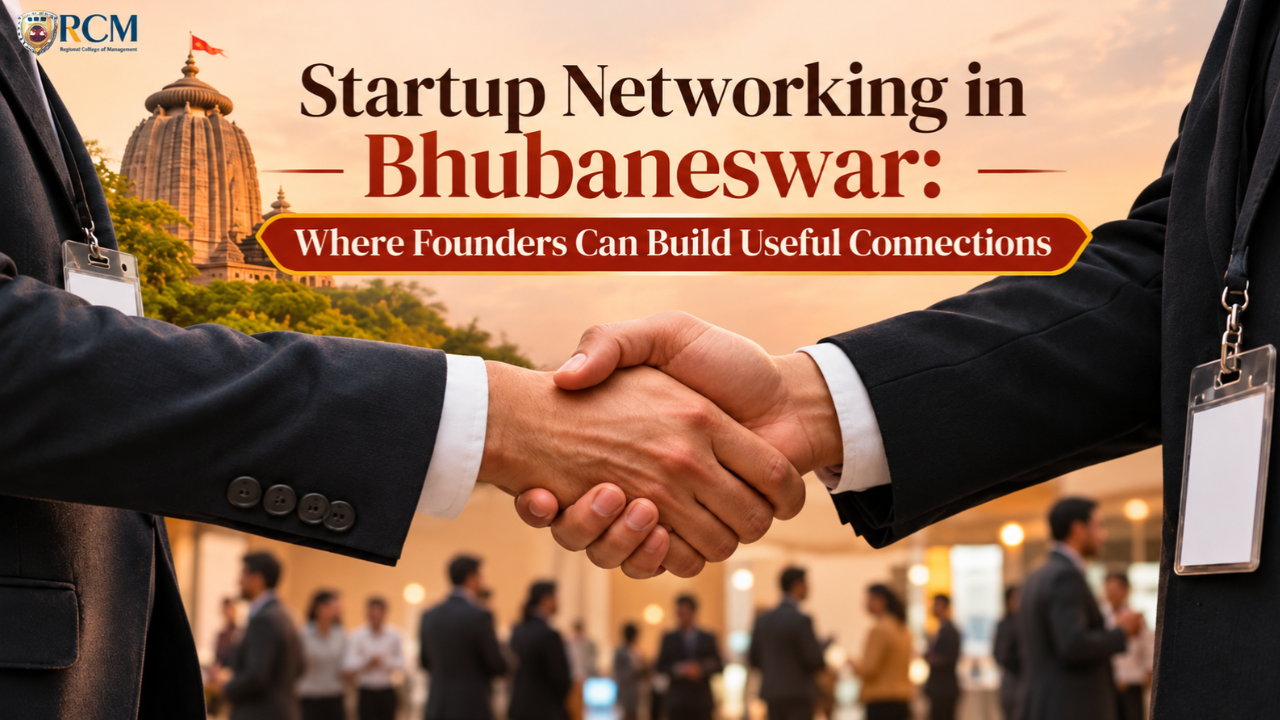
A strong business idea may give a founder a starting point, but useful relationships can help turn that idea into a workable venture. Founders need more than a list of contacts: they need access to practical knowledge, experienced mentors, potential customers, industry insights, collaborators and, where appropriate, investors.
Startup networking in Bhubaneswar can happen through startup events, institutional initiatives, incubation programmes, industry gatherings and conversations with other entrepreneurs. The most valuable connections are usually built through relevant conversations, shared interests and consistent follow-up—not simply by attending an event or exchanging visiting cards.
What Is Startup Networking and Why Does It Matter?
Startup networking is the process of building professional relationships with people who can contribute knowledge, feedback, opportunities, services or collaboration to a business. It brings founders into contact with other entrepreneurs, mentors, industry professionals, potential customers, investors and organisations that support enterprise development.
For a founder, networking is not just about meeting influential people. It is about finding the right people for the business’s current stage and building relationships that can become useful over time.
Why do founders need a professional network?
A founder may understand a product or service very well but still need help with market validation, customer acquisition, operations, compliance, technology, hiring or business expansion. Conversations with people who have relevant experience can help identify gaps and avoid preventable mistakes.
Networking can be useful in different ways:
- First-time founders: Learn how to test an idea, understand customer needs and approach early business decisions.
- Early-stage startups: Exchange experiences with peer founders, identify potential collaborators and learn from practical challenges.
- Student entrepreneurs: Meet business owners, understand how companies operate and explore whether an idea can become a viable venture.
- Small business owners: Discover new suppliers, customers, distribution partners and ways to reach new markets.
- Women entrepreneurs: Build professional visibility, find peer support and connect with relevant business networks.
- Established businesses: Explore partnerships, new products, technology adoption and opportunities to collaborate with emerging ventures.
Networking versus collecting contacts
There is a difference between meeting 50 people at an event and developing two or three relationships that lead to meaningful conversations.
| Collecting Contacts | Building Useful Connections |
|---|---|
| Exchanging business cards or social profiles | Understanding each other’s work and objectives |
| Sending generic messages | Following up with a relevant reference to the conversation |
| Asking for immediate help | First understanding what the other person may need |
| Focusing on the number of contacts | Developing a smaller, relevant professional network |
| Contacting someone only when a favour is needed | Maintaining a genuine professional relationship |
A useful network grows when both sides find value in staying connected.
Where Can Founders Find Startup Networking Opportunities in Bhubaneswar?
Founders in Bhubaneswar can explore several types of networking opportunities. The right choice depends on the venture’s stage, sector, immediate business needs and the kind of people the founder wants to meet.
1. Startup events and business networking gatherings
Startup events bring people from different parts of the business ecosystem into one place. These may include founders, students, small business owners, mentors, industry professionals, investors and service providers.
They can offer opportunities to:
- Discover products and services developed by emerging businesses.
- Speak with founders about their experiences.
- Understand how different businesses approach customers and markets.
- Find potential collaborators or suppliers.
- Attend expert sessions and exchange ideas.
- Explore startup pitch opportunities and business showcases.
When choosing an event, look beyond its size or promotional claims. Check the published agenda, participant categories, speakers, organiser credentials and opportunities for direct interaction.
2. Incubators and startup support organisations
Incubation centres can be useful for founders who need structured support beyond informal networking. Depending on the programme, an incubator may provide access to workspaces, mentors, workshops, business development support and connections with funding networks.
One relevant example in Bhubaneswar is Odisha Startup Hub (O-Hub), which is presented by Startup Odisha as a government-owned centralised incubator. Its listed facilities include co-working infrastructure, meeting spaces, mentor connects, boot camps, workshops, business development services and investor connections. Access to particular services or support may depend on the applicable programme and eligibility requirements. Startup Odisha
For a founder, an incubation centre can be more than a workspace. It can be a place to meet people working on different business problems, receive feedback and learn about relevant ecosystem programmes.
3. Government-supported startup initiatives
Government initiatives can help founders understand the formal support available to eligible startups. They may also provide information about recognition, incubation, policy provisions, capacity building and ecosystem development.
The Startup Odisha Policy page outlines the state’s policy framework, including ecosystem development, institutional support and provisions for eligible recognised startups. The portal states that the 2016 policy remains operational until a new policy is notified. Founders should check the latest official notification and current eligibility conditions before relying on any particular incentive. Startup Odisha
The broader Startup Odisha Initiative describes the state’s objectives around developing an enabling startup ecosystem, encouraging incubators and strengthening institutional support for entrepreneurship. Startup Odisha
These resources are useful starting points for understanding the ecosystem. They should not be treated as a guarantee that every applicant will receive funding, incubation or other benefits.
4. University and institutional entrepreneurship initiatives
Colleges and management institutions can provide opportunities for students and aspiring founders to interact with entrepreneurs and business professionals.
Institutional events, entrepreneurship activities, business showcases and pitch sessions can help participants understand how ideas are developed, presented and evaluated. Students can also learn from business owners about customer expectations, pricing, marketing, operations and the challenges of running an enterprise.
For student founders, these interactions can provide an early introduction to the business ecosystem before they formally launch a venture.
5. Industry conferences and professional gatherings
Industry conferences, business associations, trade events and professional gatherings can help founders meet people who understand a particular sector.
For example, a founder developing a food business may benefit more from meeting food distributors, restaurant operators and packaging suppliers than from attending a general networking event. Similarly, a technology startup may prioritise conversations with potential business clients, technology specialists and sector-specific mentors.
The objective should be to attend gatherings where the people and discussions are relevant to the business.
6. Founder communities and peer networks
Peer founders can provide a perspective that is difficult to obtain from general business advice. They understand the practical challenges of launching, managing and growing a venture because they may be dealing with similar issues.
A founder community can help members exchange experiences related to:
- Customer acquisition and retention.
- Hiring and team management.
- Pricing and business models.
- Marketing and brand positioning.
- Vendor and partner selection.
- Product development and market feedback.
- Operational challenges and business growth.
A peer network does not need to be large. A small group of founders who meet regularly and share practical knowledge can become a valuable professional resource.
How Can Founders Build a Useful Entrepreneur Network?
Building an entrepreneur network in Odisha requires a deliberate approach. Instead of trying to meet everyone, founders should identify the people who can help them understand their market, improve their business decisions or explore relevant opportunities.
1. Identify the people you need to meet
Start by identifying your current business priorities. Are you trying to validate an idea, find customers, improve operations, understand regulations or explore partnerships?
Your priorities will determine whom you should approach.
For example:
- If you are validating an idea, speak with potential customers and experienced founders.
- If you are improving a product, connect with industry specialists and relevant technology professionals.
- If you are exploring distribution, meet retailers, suppliers and channel partners.
- If you are considering investment, first understand the expectations of investors and the funding stage appropriate for your venture.
2. Prepare a clear founder introduction
You should be able to explain your business in a few sentences. Avoid lengthy explanations filled with technical terms or promotional language.
A useful introduction can cover:
- Who you are.
- What your business does.
- Whom it serves.
- What problem it aims to solve.
- What kind of connection or insight you are looking for.
Example:
“Hello, I am developing a local food brand focused on convenient, regionally inspired products. We are currently exploring customer demand and distribution opportunities. I would be interested in understanding your experience in retail and product marketing.”
This gives the other person enough context to decide whether a useful conversation is possible.
3. Ask thoughtful questions
A networking conversation should not feel like a sales pitch or an immediate request for funding.
Ask questions that show you have taken an interest in the other person’s experience.
Examples include:
- What challenges did you face when entering this market?
- Which customer segment has responded most positively to your product?
- What skills do you think an early-stage founder should develop?
- Are there any industry events or communities worth following?
- What should a new business understand before approaching distributors?
Good questions often lead to more useful conversations than a long explanation of your own business.
4. Offer value instead of only asking for help
Networking works best when it is reciprocal. You may not have funding or extensive experience to offer, but you can still share useful information, introduce relevant people, provide feedback or support another founder’s work.
For example, a digital marketing professional may share insights about online customer acquisition, while a product founder may offer feedback on packaging or customer experience.
Small, genuine contributions help build trust.
5. Follow up professionally
After meeting someone, send a short message within a reasonable time. Mention where you met and refer to something specific from the conversation.
Example follow-up message:
“Hello, it was good meeting you at the business networking event. I found your insights on customer acquisition useful, particularly your point about understanding repeat purchases. I would be happy to stay connected and exchange ideas.”
If you discussed a specific next step, mention it clearly. Avoid repeatedly sending generic messages asking for a meeting.
6. Maintain relationships over time
A professional relationship should not depend on an immediate business requirement. Share relevant updates, congratulate people on genuine milestones, attend follow-up events and stay in touch when there is something meaningful to discuss.
Consistency is more valuable than contacting someone only when you need a favour.
A simple networking framework for founders
Prepare
Define your business objective and identify the type of people you want to meet.
Introduce
Explain your business, customer and current challenge clearly.
Engage
Ask relevant questions, listen carefully and look for shared interests.
Contribute
Share a useful insight, resource, introduction or practical suggestion.
Follow Up
Send a personalised message and agree on a relevant next step where appropriate.
Stay Connected
Maintain the relationship through meaningful, occasional interactions.
Who Should Founders Connect With?
A useful founder community includes people with different experiences and capabilities. Founders should build a balanced network rather than focusing exclusively on investors or influential personalities.
| Connection | What They Can Contribute |
|---|---|
| Peer Founders | Practical experiences, shared learning and potential collaboration. |
| Experienced Mentors | Business guidance, feedback and perspective on decisions. |
| Angel Investors and Venture Capital Professionals | Understanding of investment expectations and possible funding pathways. |
| Industry Experts | Sector knowledge, technical insights and market understanding. |
| Potential Customers | Feedback on needs, product value and customer experience. |
| Business Partners and Suppliers | Distribution, delivery, operations and collaboration opportunities. |
| Academic Institutions and Incubators | Learning, mentorship, programmes and ecosystem access. |
| Government Ecosystem Representatives | Information about official initiatives, recognition and applicable support. |
Why peer founders are important
Other founders may understand the uncertainty involved in hiring the first employee, finding early customers, managing cash flow or changing a business model. Their experiences can help you consider different approaches.
However, every business is different. Advice should be evaluated in the context of your sector, customers, resources and stage of development.
Why mentors and industry experts matter
Mentors can help founders examine assumptions, identify blind spots and think through business decisions. Industry experts may offer deeper knowledge of regulations, technology, supply chains, customer behaviour or market trends.
A useful mentor relationship requires preparation. Be specific about the challenge you want to discuss, listen to the feedback and take responsibility for your decisions.
When should founders connect with investors?
Investors are one part of the startup ecosystem, but they are not the only people a founder needs to meet. Before approaching an investor, understand your business model, market, progress and funding requirement.
An initial networking conversation can be about learning how investment decisions are made rather than asking for immediate financial support. A connection does not guarantee an introduction, investment or funding decision.
Startup Networking Opportunities in Bhubaneswar: How AA KA MA 2026 Brings Entrepreneurs Together
One of the local opportunities founders and aspiring entrepreneurs can explore is AA KA MA – Bizz Buzz Soirée 2026, an initiative of Regional College of Management (RCM), Bhubaneswar.
The event’s positioning is: “Celebrating entrepreneurship, empowering changemakers and creating opportunities for the next generation of business leaders.” Its central theme connects Odisha’s maritime heritage with contemporary enterprise, presenting the idea of carrying a legacy of trade and enterprise into a new generation of business activity. RCM Bhubaneswar
The 2026 edition is scheduled for 14–15 November 2026 at RCM Campus, Bhubaneswar. The event information and visitor guide published by RCM identify the campus venue and the two-day programme.
What networking opportunities does AA KA MA 2026 offer?
The official event page lists activities that can create opportunities for interaction between entrepreneurs, students, visitors, jury members and industry guests.
1. Startup Pitch & Idea2Success Summit
The Startup Pitch & Idea2Success Summit is described as a platform for aspiring entrepreneurs, emerging startups and innovative thinkers to present business concepts before industry experts, mentors and potential investors. The separate Idea2Success page also identifies student innovators, early-stage startups, established MSMEs, business owners, women entrepreneurs and technology or social innovators as potential participant groups. RCM Bhubaneswar+1
For founders, a pitch event can create opportunities to explain a business idea, receive feedback and understand how other people evaluate a business proposition. The value of participating is not limited to the presentation itself; conversations before and after a session can also be useful.
2. Entrepreneurial stalls and product showcases
The official agenda includes entrepreneurial stalls and product showcases across both days. On 14 November, the schedule includes visits to entrepreneurial stalls and interaction with entrepreneurs. On 15 November, it lists stall visits, product showcases and further interaction with entrepreneurs and the jury. RCM Bhubaneswar
These interactions can help founders understand how other businesses present products, communicate value, engage visitors and respond to questions. They may also create opportunities to identify potential customers, suppliers or collaborators.
3. Interaction with mentors, jury members and industry professionals
The event page publishes profiles of speakers and industry professionals, including people whose listed experience covers founder coaching, business expansion, financial services and entrepreneurship. The agenda also includes jury interaction and feedback. RCM Bhubaneswar
For attendees, these sessions can provide an opportunity to hear different professional perspectives. Participants should approach speakers and jury members respectfully, ask relevant questions and avoid assuming that a brief conversation will lead to a formal mentorship or investment relationship.
4. Networking across different business stages
The Idea2Success page identifies several groups that the summit aims to bring together, including student innovators, early-stage startups, established MSMEs, alumni and business owners, women entrepreneurs, and technology or social innovators. Regional College Of Management
This mix can make the event relevant to people at different stages of their entrepreneurial journey. A student exploring an idea may learn from an operating business, while an established entrepreneur may discover a new product, potential partner or emerging talent.
What does the two-day AA KA MA 2026 agenda include?
The currently published RCM agenda lists the following networking-related activities:
| Date | Published Programme Highlights |
|---|---|
| 14 November 2026 | Inauguration, entrepreneurial stall visits, pitch deck presentations, jury interaction and feedback, stall operations, visitor engagement and networking. |
| 15 November 2026 | Stall visits and product showcases, further pitch presentations, interaction with entrepreneurs and jury, evaluation, awards, cultural programme and closing networking. |
The agenda also includes registration and welcome activities on the first day. Timings and programme details should be checked on the official event page before attending, as event information may be updated.
Registration and event information
If you are a founder, student innovator, entrepreneur or business professional interested in attending or exploring participation, review the official event details and the relevant registration category before proceeding.
Explore AA KA MA – Bizz Buzz Soirée 2026
Register for AA KA MA 2026
View the supplied AA KA MA 2026 Facebook poster/carousel
How Can AA KA MA Connect Founders, Students and the Business Ecosystem?
Entrepreneurship becomes easier to understand when people can observe businesses, ask questions and learn from different experiences. Events that bring together students, founders, established businesses and professionals can create an environment for this kind of exchange.
At AA KA MA 2026, the published activities provide several possible points of interaction:
- Entrepreneurs and startup founders can present their products or business concepts and interact with visitors.
- Students and aspiring innovators can observe business showcases, learn from founders and understand how ideas are presented.
- Industry professionals and jury members can share perspectives through published speaker sessions, pitch evaluation and interaction.
- Small businesses and emerging ventures can use product showcases to improve visibility and explore relevant business conversations.
- Mentors and potential investors are identified as part of the intended audience for the Startup Pitch & Idea2Success Summit.
These interactions can encourage idea exchange, learning, visibility and possible collaboration. They should be viewed as opportunities to begin conversations—not as a promise of business partnerships, mentorship or investment.
From Odisha’s maritime heritage to modern enterprise
AA KA MA’s central narrative connects Odisha’s maritime heritage with contemporary entrepreneurship. The event page uses the idea of heritage, innovation and enterprise to frame its vision. RCM Bhubaneswar
This connection offers a useful way to think about entrepreneurship: trade and enterprise have always depended on understanding markets, building relationships and connecting people across different places. Today’s founders use different tools and business models, but the importance of trust, communication and collaboration remains.
How Does RCM Connect Management Education with Entrepreneurial Exposure?
Management education can help students understand business functions such as marketing, finance, operations, strategy, human resources and organisational decision-making. Exposure to entrepreneurs and business events can complement classroom learning by showing how these concepts appear in real business situations.
Regional College of Management, Bhubaneswar, organises AA KA MA as an initiative connecting Odisha’s heritage with a new era of enterprise. Its event programme includes entrepreneurial showcases, pitch presentations and interaction opportunities. RCM Bhubaneswar
For readers exploring management education, RCM’s MBA+ and PGDM+ programmes provide further information about its management learning pathways:
Choosing a management programme requires considering curriculum, learning approach, faculty, industry exposure, fees, outcomes and personal career goals. An event such as AA KA MA can be one way to observe business activity and interact with people beyond the classroom, but it should not be treated as a substitute for evaluating an academic programme.
How Can You Make the Most of a Startup Networking Event?
Attending a startup event without a clear objective can result in many brief conversations but few useful outcomes. A little preparation can help founders and students use their time more effectively.
Before the event
- Set a clear objective: Decide whether you want customer feedback, market knowledge, potential partners, mentors or peer connections.
- Prepare a short introduction: Practise explaining your idea or business in 30–45 seconds.
- Update your business profile: Keep your website, portfolio or professional profile accurate and easy to share.
- Prepare a pitch deck if relevant: Bring it if you are participating in a pitch session or expect to discuss your business in detail.
- Research the agenda: Identify relevant sessions, speakers, stalls and networking periods.
- Prepare questions: Think of two or three questions that are relevant to the people you hope to meet.
During the event
- Listen carefully before explaining your own business.
- Ask permission before taking someone’s contact details or sending follow-up material.
- Keep conversations concise when other attendees are waiting.
- Take brief notes after useful discussions.
- Avoid treating every interaction as a sales opportunity.
- Respect the event’s participation and photography guidelines.
After the event
- Send personalised follow-up messages.
- Connect through the professional platform discussed during the conversation.
- Share information or introductions you promised.
- Organise contacts by relevance and next action.
- Follow up on genuine opportunities without pressuring the other person.
A checklist for first-time student entrepreneurs
Event Preparation Checklist
First-time attendees do not need to impress everyone in the room. Focus on understanding the business environment, asking thoughtful questions and starting a few relevant conversations. A useful connection can begin with a simple exchange of ideas.
Building Meaningful Founder Connections for the Future
The startup ecosystem in Odisha includes government-supported initiatives, incubation infrastructure, educational institutions, business events and entrepreneurs working across different sectors. For founders in Bhubaneswar, these provide different routes to learn, meet relevant people and explore business opportunities.
The most effective networking approach is purposeful and consistent: identify the people you need to meet, communicate your business clearly, listen to others, contribute where possible and maintain relationships beyond a single event.
AA KA MA – Bizz Buzz Soirée 2026, organised by Regional College of Management, Bhubaneswar, is one upcoming opportunity to explore these interactions through its entrepreneurial stalls, Startup Pitch & Idea2Success Summit, presentations and networking activities.
If you are interested in entrepreneurship, business showcases or connecting with the local business community, explore the event information and registration details.
FAQs
Founders can explore O-Hub, Startup Odisha initiatives, institutional entrepreneurship programmes, industry gatherings and business events such as AA KA MA 2026.
Startup networking events can help founders exchange ideas, meet potential collaborators, learn from industry professionals and discover relevant business opportunities.
They can participate in relevant startup events, explore incubation programmes, prepare a clear business introduction and approach mentors or investors with specific questions.
AA KA MA 2026 includes entrepreneurial stalls, the Startup Pitch & Idea2Success Summit, pitch presentations, jury interaction and scheduled networking activities.
Students can attend entrepreneurship events, interact with business owners, join relevant institutional initiatives, seek feedback and maintain professional relationships with founders and mentors.