The applause fades in minutes. The real work begins the next morning.
For a founder, the last slide is not the end of the pitch. It is the start of a different phase, where feedback, doubts and half-promised introductions have to be turned into decisions. Many people ask what happens after startup pitch sessions, and honest answers are less dramatic than the pitch itself: reading notes, fixing gaps and following up carefully.
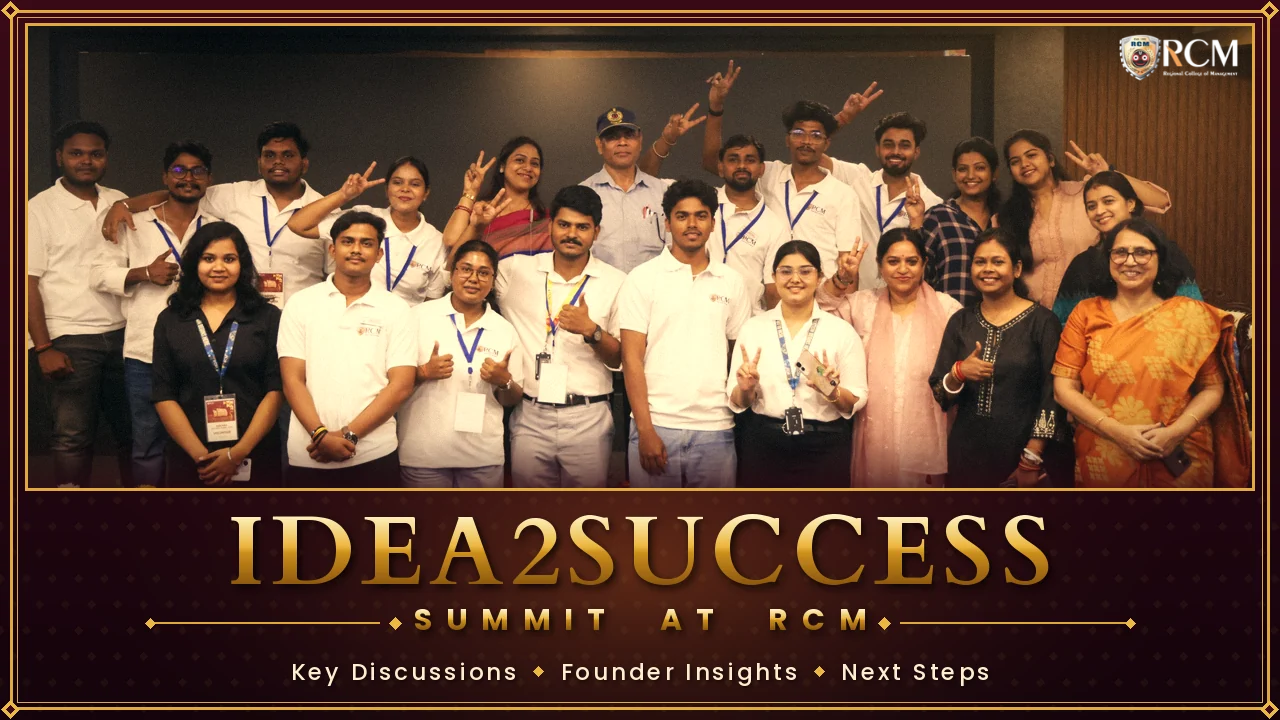
AA KA MA – Bizz Buzz Soirée 2026, held on 14–15 November 2026 at the RCM Campus in Bhubaneswar, included pitch sessions and jury interaction within its Startup Pitch & Idea2Success Summit. For preparation before the stage, see our guide to startup pitch competitions in Odisha and how founders can prepare. This article covers the road afterwards.
Table of contents
- What Happens After a Startup Pitch?
- How to Read Startup Pitch Feedback
- Investor Follow-Up: Staying Professional, Not Pushy
- Documentation and Funding Application Readiness
- Mentorship and Networks After the Stage
- Founder Learnings from AA KA MA 2026
- Common Mistakes After a Pitch
- A 30-Day Plan for Possible Next Steps
- From Odisha’s Trading Heritage to Tomorrow’s Founders
- Frequently Asked Questions
What Happens After a Startup Pitch?
It helps to think in three windows, each with a different job:
How to Read Startup Pitch Feedback
Jury feedback can feel personal, yet it is data. The trick is to sort it before reacting. Group each comment under market, product, revenue model, financials or team, then look for repetition. One opinion is a note; the same concern from several people is a pattern worth testing.
| What you may hear | What it often signals | A sensible response |
|---|---|---|
| “Who is your first customer?” | The target market is unclear. | Interview ten likely buyers and record what they say. |
| “How do you make money?” | The revenue model is vague. | Test pricing and write the cost per sale. |
| “What is different here?” | The value proposition is weak. | Compare three competitors honestly and sharpen your edge. |
| “How will you fund this?” | Financial planning is thin. | Build a simple twelve-month projection and funding ask. |
The summit’s ten-slide deck framework gives a ready map for this review: problem, solution, value, market, competition, revenue, growth, operations, financials and roadmap. The pillar guide on the Idea2Success Summit at RCM and its key discussions explains each slide.
Investor Follow-Up: Staying Professional, Not Pushy
If someone shows interest, send a short thank-you note within a few days. Mention one point from your conversation, attach the updated deck only if asked and state one clear next step, such as a short call. Then wait. Chasing daily damages trust. Interest at a pitch is not a commitment, and investors make independent decisions after their own review.
RCM’s summit page describes an up-to ₹1 crore funding opportunity. It is not a guaranteed award. Any funding depends on eligibility, due diligence, assessment, funder decisions and applicable terms, and participation does not guarantee funding, investment, grants or selection.
AA KA MA – Bizz Buzz Soirée 2026
The event has concluded. See the official page for programme details and updates.
Visit the official event pageDocumentation and Funding Application Readiness
A funding application asks for evidence, not enthusiasm. Before applying anywhere, gather what reviewers usually expect:
- A clear business description and updated pitch deck.
- Registration and compliance papers, where applicable.
- Financial projections and a stated funding ask.
- Proof of traction: customer conversations, pilots or early sales.
- Details of the team and its roles.
Requirements differ by scheme and funder, so check the official terms. Startup India initiatives and startup support resources are an independent starting point for government-linked information. The summit’s listed programme collaborator, ScaleMate Services Pvt. Ltd., is named for funding facilitation, documentation guidance and application support, but no outcomes are claimed here.
Mentorship and Networks After the Stage
A guest list is not a mentor list. Mentorship forms when a founder returns with a specific question and respects a busy person’s time. Keep notes on who offered what, send a concise follow-up and ask for advice on one issue at a time. Peer networks matter too: fellow founders at a business carnival often share suppliers, customers and hard-earned lessons. This article reports no mentoring relationships from the summit, as none has been verified.
Founder Learnings from AA KA MA 2026
These lessons come from the summit’s format, not from reported results:
- Prepare before the stage. A structured deck makes feedback more useful.
- Collect feedback deliberately. Jury interaction only helps if someone writes it down.
- Treat opportunities as possibilities. Guidance, introductions and funding depend on assessment.
- Keep testing. Customers, not applause, settle most arguments.
Common Mistakes After a Pitch
- Taking criticism personally and changing nothing.
- Changing everything at once after one comment.
- Sending long, repeated follow-up messages.
- Applying for funding before documents are ready.
- Treating interest as a promise.
- Going silent for months.
A 30-Day Plan for Possible Next Steps
This is a suggested working plan, not a guaranteed route to funding.
Your 30 Days After the Pitch
Record and sort feedback; send thank-you notes.
Output: Prioritised list of doubtsTalk to customers; test pricing or the product.
Output: New evidenceRevise the deck and financial projections.
Output: Stronger pitch and numbersOrganise documents; check scheme eligibility; plan follow-ups.
Output: Application-ready file and milestonesA suggested working plan, not a guaranteed route to funding.
From Odisha’s Trading Heritage to Tomorrow’s Founders
Odisha’s Sadhabas did not set sail once and stop. Trade meant return voyages, adjustments and new markets. Founders today do the same after each pitch: return, adjust and sail again. For the wider story, see AA KA MA 2026 highlights and Odisha’s business community. Management skills in finance, strategy and marketing support that journey, and RCM’s MBA+ and PGDM+ programmes relate to them, without guaranteeing business success. A pitch tests an idea; what follows tests the founder.
Frequently Asked Questions
Founders review jury feedback, fix weaknesses, follow up with interested parties, organise documents and decide whether to pursue funding, mentorship or more validation.
Most progress comes after the pitch, when feedback is turned into a better business model, stronger documents and useful connections.
Sort the feedback, test the biggest doubts, update the deck, follow up politely, prepare documentation and check eligibility before any funding application.
Opportunities such as guidance or introductions are not guaranteed; funding depends on eligibility, due diligence, assessment and the decisions of funders.
A pitch is a checkpoint, not a finish line, and structured feedback and preparation shape what comes next.
Turn Founder Lessons into Your Next Learning Opportunity
Reading feedback, planning finances and making sound decisions are management skills. Explore RCM’s MBA+ and PGDM+ programmes.
Admission & Enquiry – Connect with RCM
RCM Lane, Plot No. GD 2/12 & 13, Chakadola Vihar, Chandrasekharpur, Bhubaneswar – 751023, Odisha, India.
Contact the RCM admission team for programme information, eligibility, application guidance and admission-related enquiries.