
AI in finance is changing how students learn the subject: less memorising, more working with real data. In a press meet covered by Infocus Odisha, faculty and MBA Finance students at Regional College of Management (RCM), Bhubaneswar, explained why AI, sustainability and practical exposure now belong together in finance education. This post unpacks their key ideas on AI in finance education, financial modelling and experiential learning, and what they mean for finance students.
Table of contents
How AI Is Changing Finance Education
Professor Satyanath Mahapatra of RCM’s Department of Finance links the rise of AI and machine learning to a changed business environment. His point is that students cannot learn everything from books or the internet, so practical exposure matters.
Financial modelling was another practical area where participants explored how technology and data can support modern finance decisions.
That is where financial analytics comes in. Working with realistic data and tools such as Power BI turns finance concepts into decisions. Students who want to go deeper on this side can explore RCM’s PGDM+ Data Science & Business Intelligence programme.
Experiential Learning in Finance: Learn by Doing
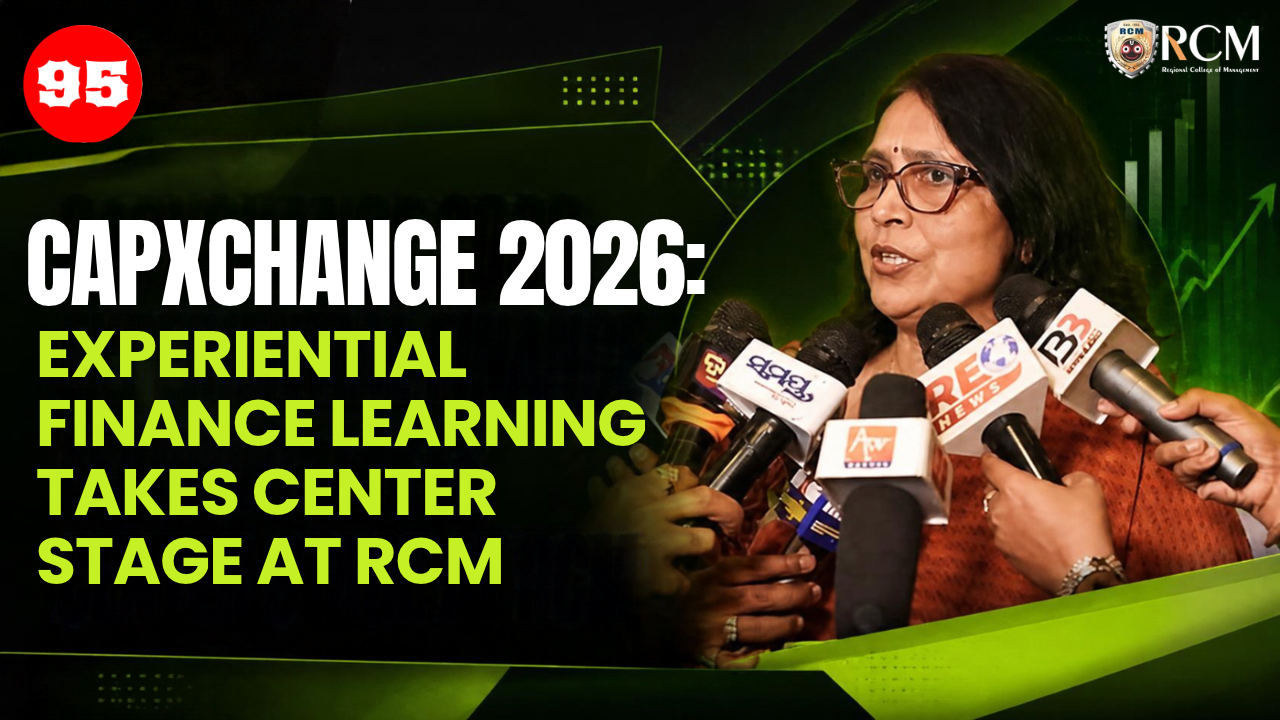
Dr. Shraddha Padi, Additional Director at RCM, observes that finance can feel theoretical when taught only from textbooks. Experiential learning answers this by putting students into competitions and projects built on real-world data.
In the financial modelling competition, participants analyse realistic data and develop forward-looking models. In the poster competition, they present ideas on FinTech, AI, ESG and sustainable business. Dr. Padi adds that RCM wants to bring this kind of learning into the regular curriculum.
Why Sustainability Belongs in Finance
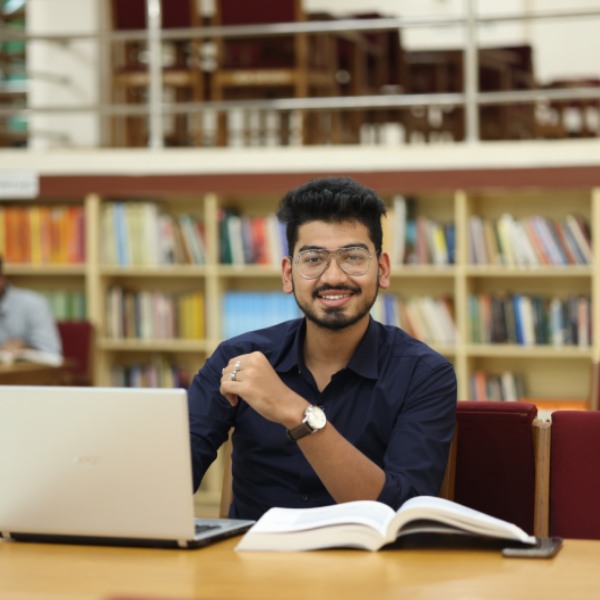
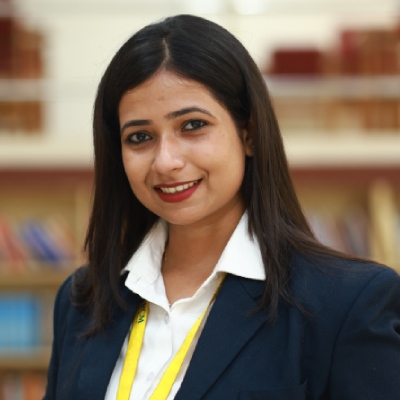
An MBA Finance student in the video notes that companies prioritise profit, yet sustainability and security are gaining importance. Ankita Das frames the aim as growing finance without harming the environment.
The programme reflects this through poster themes on ESG and sustainable business practices, and through panel discussions. Learners interested in sustainable finance and green finance can look at PGDM+ Green Finance & ESG (FinTech).
Voices from the Video
- Dr. Shraddha Padi: Names three goals: learning from industry leaders, collaborating with other institutions, and building skills through competitions. She notes that RCM also holds conclaves in HR and marketing.
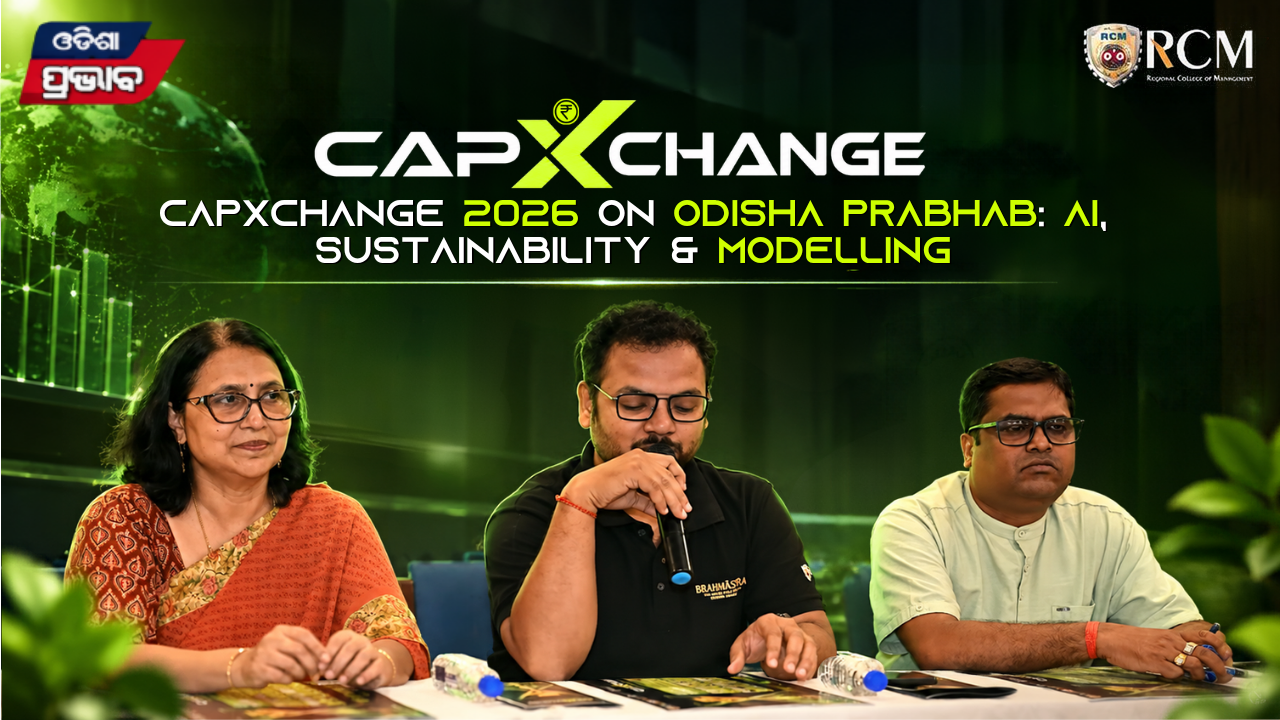
- Professor Satyanath Mahapatra: Outlines the two-day plan: a modelling competition, a poster competition, two panels and masterclasses with industry trainers.
- MBA Finance students: Explain that finance students will see how sustainability, AI and emerging technologies work in the sector, and how AI, data analytics and modelling can create meaningful solutions.
What Finance Students Can Learn from CAPXCHANGE 2026
- Read and analyse real financial data with modern tools such as Power BI.
- Build financial modelling skills in a competitive, practical format.
- Connect finance concepts to real business problems.
- Understand ESG and sustainable business practices.
- Learn directly from industry experts and meet students from other colleges.
Programme details are on the CAPXCHANGE 2026 Finance Conclave page.
Conclusion
The video’s message is consistent: AI and data tools matter, but students build real skill by using them. Pairing theory with realistic data, sustainability awareness and industry conversations prepares finance students for a fast-changing profession.
FAQs
It is teaching finance with AI, machine learning and data analytics, so students work with real data and build practical skills alongside theory.
In the video, it is one of the tools participants use to analyse realistic data in the financial modelling competition.
ESG stands for Environmental, Social and Governance, factors considered alongside profit when assessing a business.
FinTech, AI, ESG and sustainable business practices.
Dr. Padi says the aim is for graduates to contribute effectively to companies once they enter the workforce.
Curious how RCM connects finance, AI and data in the classroom? Watch the video above, or read about the MBA+ Finance & FinTech programme when you’re ready.