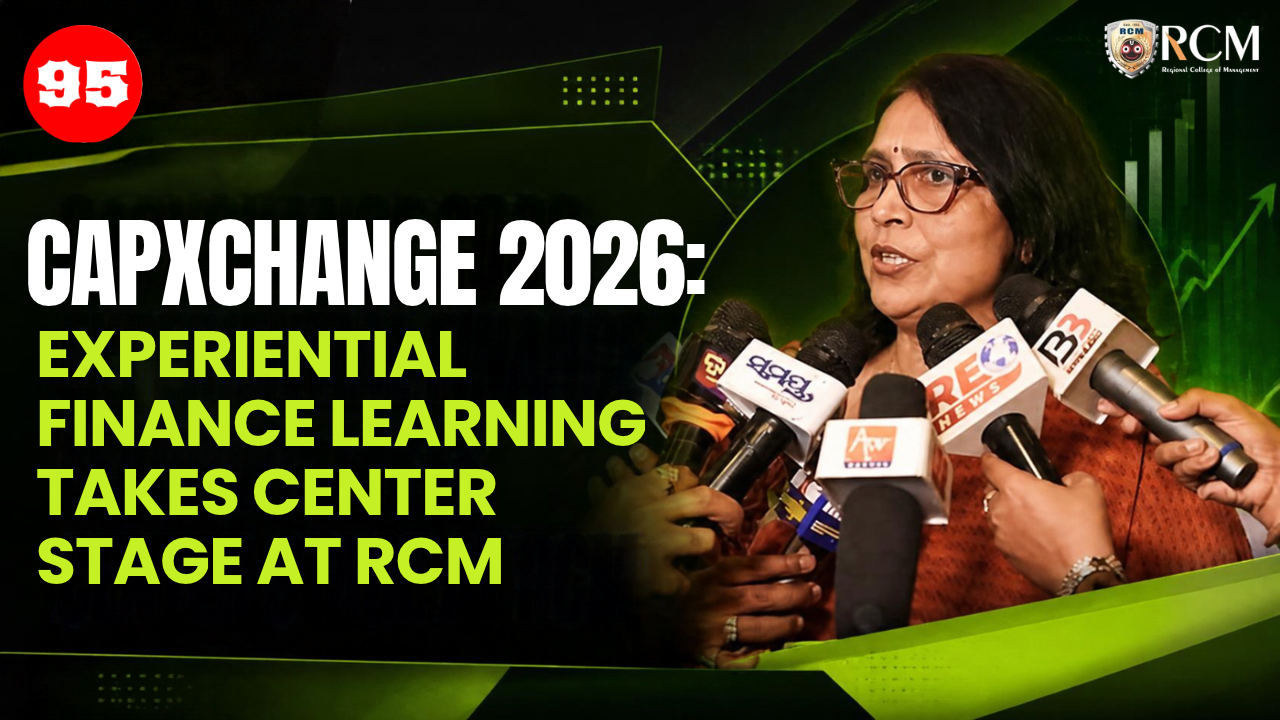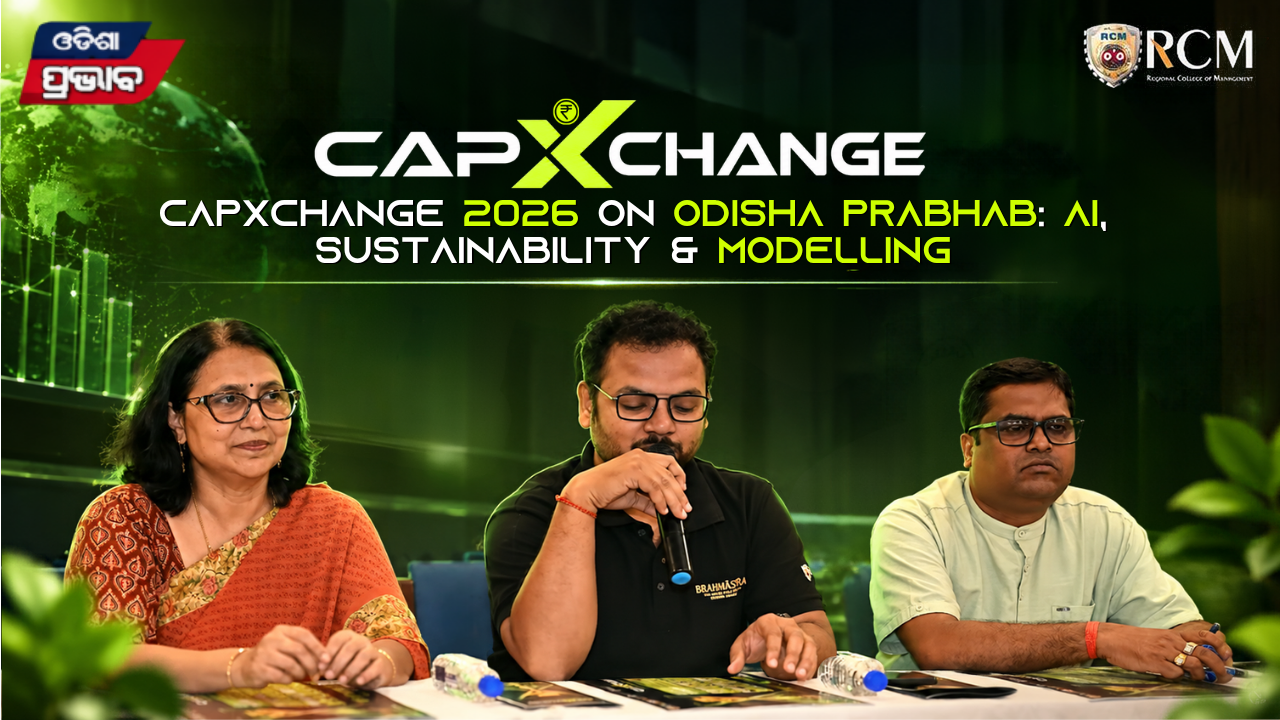

Experiential learning in finance means learning by doing: students apply classroom concepts to realistic tasks and business situations. At Regional College of Management (RCM) Bhubaneswar, this includes a financial modelling competition using realistic data and Power BI, exposure to AI, FinTech and ESG themes, and interaction with industry representatives through panel discussions and masterclasses.
Table of contents
Why Practical Exposure Matters
As AI and machine learning reshape how businesses use financial data, finance students need more than textbook knowledge. This video from RCM Bhubaneswar shows how experiential learning and practical finance education can bring classroom ideas closer to real decisions. Through financial modelling tasks, poster presentations and conversations with industry representatives, the coverage highlights how students build industry exposure while learning to work with data, technology and emerging finance themes. It is pre-event coverage for CAPXCHANGE 2026, but the focus here is the learning experience itself.
Watch the Video
The video, CAPXCHANGE 2026 Pre-Event Coverage: Experiential Learning at RCM Bhubaneswar, is featured on the Reo News YouTube channel. It previews how RCM’s CAPXCHANGE 2026 finance conclave places hands-on learning at its centre.
Key Video Highlights
- Hands-on approach: Students connect classroom finance concepts with realistic tasks.
- Financial Modelling Competition: Participants work with realistic financial data and tools such as Power BI.
- Poster competition: An Innovative Poster-Making and Poster-Presentation Competition.
- Emerging themes: AI, FinTech, ESG, sustainable business and wealth management.
- Industry access: Panel discussions and masterclasses.
- Collaboration: Interaction with students from other universities.
What Experiential Learning Looks Like
Experiential learning connects theory to practice. Instead of only studying finance concepts, students work through realistic tasks and business situations, making assumptions, interpreting information and explaining decisions. This kind of practical finance education can build confidence and analytical habits, but it supports academic learning rather than guaranteeing placements or jobs.
Financial Modelling and Power BI
In the video, the Financial Modelling Competition gives participants realistic financial data to work with, using Power BI and other tools. Power BI’s role is to analyse, visualise and communicate financial data; it does not build the complete model on its own. Tasks like these can help develop industry-ready skills in analysis and presentation.
AI, FinTech, ESG and Sustainable Finance
The event explores AI, machine learning, FinTech, ESG, sustainable business practices and wealth management. The connection matters for finance students: AI and machine learning help analyse financial data, FinTech changes how financial services are delivered, and ESG and sustainable finance influence how organisations are evaluated.
Industry Exposure
According to the video and RCM source, executives or representatives from organisations including EY, GDS and Deloitte are participating. Panel discussions, industry trainers and masterclasses let students hear practitioner perspectives and ask questions, while collaboration with students from other universities widens peer learning. The RCM source also notes collaboration with FinControl.
CAPXCHANGE 2026 further demonstrates this approach through industry-oriented activities and experiential finance learning.
How RCM+ Programs Extend This Approach
The same emphasis on financial modelling, AI and ESG runs through RCM’s RCM+ specialisations at the degree level, across PGDM, MBA, MCA and BBA:
PGDM+
Postgraduate management, industry-integrated
MBA+
MBA with an industry-facing specialisation track
MCA+
Computer applications, built around emerging tech
BBA+
Undergraduate business, specialised early
Explore the Event
Interested in exploring the event and its learning opportunities? View the official CAPXCHANGE 2026 event details and registration page.
Frequently Asked Questions
Experiential learning helps students apply finance concepts through real-world activities, data, competitions, and industry interactions. It connects classroom theory with practical financial decision-making.
Financial modelling helps students analyse data, create forecasts, test scenarios, and support business decisions. It also develops analytical and problem-solving skills.
AI is making finance education more data-driven by introducing analytics, forecasting, and AI-powered tools. Students need both financial knowledge and AI/data literacy.
Power BI helps students visualise financial data through dashboards and reports. It makes trends and performance easier to analyse and communicate.
Industry exposure helps students understand how finance works in real organisations. Masterclasses, panels, and practitioner interactions connect academic learning with industry practices.