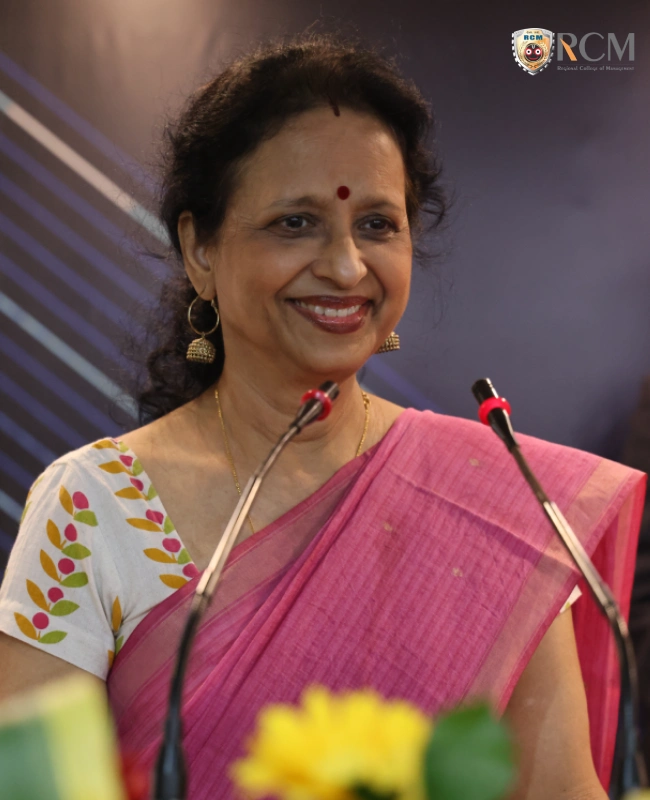
5-DAY FACULTY DEVELOPMENT PROGRAM · DAY 1

Mastering Communication & Classroom Presence

How can faculty capture attention, create stronger classroom engagement, and leave a lasting impact on students?

Regional College of Management

SESSION OVERVIEW

Teach for attention. Communicate with purpose.

Day 1 of the 5-Day Faculty Development Program focuses on Mastering Communication & Classroom Presence—helping faculty rethink how they enter the classroom, engage learners, communicate with confidence, and hold attention in an increasingly distracted world.

The session explores the “game of attention” and introduces practical approaches for making classroom communication more engaging, purposeful, and impactful.

Key Takeaways

What you’ll learn

01

Define the teaching requirement

Identify the learning objective, topic, audience, and type of academic resource needed before starting the AI-assisted workflow.

02

Classroom Presence

Learn how energy, posture, eye contact, and the way a faculty member enters the classroom can influence the learning environment.
03

What Not to Do

Move beyond classroom-opening techniques that can create distance rather than engagement.
04

Survival → Pleasure → Passion → Purpose

Explore four levels of teaching motivation and the shift toward teaching with a deeper purpose: creating meaningful change in students’ lives.
05

The OPENS Framework

Discover practical ways to open a classroom and capture attention through surprising facts, puzzles, and deeper questions.
03 · CLASSROOM PRESENCE

What not to do

The session challenges several familiar ways of beginning a class.
01

Don’t enter with low energy

Avoid entering with your chin down, shoulders falling, and eyes toward the floor. The session emphasizes entering with energy, confidence, and eye contact.
02

Don’t stand silently waiting for attention

Simply standing still and waiting for silence is presented as an outdated classroom-opening technique.
03

Don’t demand energy before creating it

Rather than asking students to show energy immediately, create an opening that gives them a reason to engage.
04

Don’t let the PowerPoint become the teacher

Do not begin by struggling with a pen drive, PowerPoint, or video. The faculty member should be the first source of attention.
05

Don’t become a “check check” faculty

Avoid repeatedly opening with checks such as “Am I audible?” The session presents this as an ineffective way to begin.
04 · TEACHING WITH PURPOSE

Four levels of teaching

A progression from practical motivation to purposeful impact.
01

Survival

Teaching primarily as a method of earning and meeting practical needs.
02

Pleasure

Teaching because it feels good and brings satisfaction.
03

Passion

Teaching because it is something the faculty member genuinely loves.
04

Purpose

Teaching with the intention of changing students’ lives and leaving them better than they were found.

Your focus has changed from me to we.

Effective classroom communication is not simply about delivering content. It is about earning attention, creating engagement, and using teaching as a means to make a meaningful difference.

05 · ATTENTION FRAMEWORK

The OPENS Framework: Hooking Attention in the First Minute

For classroom management that works with short attention spans, the session offers an acronym for how to open a class.

O

Oh-my-god fact

Start with a genuinely surprising statistic or fact.
P

Puzzle

Introduce a paradox that reframes what students think they already know.
E

Explain with a why

Tell students why the topic matters before teaching it.
N

No-nonsense (what the audience wants)

Anchor content to what students actually need, not just the syllabus order.
S

Storytelling

Open with the story's hook directly — never “once upon a time” or “let me tell you a story.”
06 · RESOURCE PERSON

Meet the speakers

Dr. Sanghamitra Pal

Director, RCM Global B-School

Dr. Itishree Devi

Professor, RCM

Admissions 2026

Limited Seats Available for 2026 Enrollment!

Don’t miss your chance to secure a spot for 2026. Enquire today!

Watch other fdp sessions

Explore the FDP sessions

Watch Day 1 of RCM’s 5-Day Faculty Development Program on mastering communication and classroom presence, capturing attention, engaging students, and teaching with purpose.
Watch Day 2 of RCM Bhubaneswar's FDP 2026 on AI for Teaching & Resource Development, covering AI in higher education, learning design and academic resources.

Explore AI in education with Sashidhar Ambatipudi on AI-powered teaching, assessment, prompt architecture, research workflows and faculty productivity.

Learn personal branding for academics through the 5 C’s framework and a practical 30-day visibility plan in this RCM Bhubaneswar FDP session.

Explore how AI in education is reshaping teaching at RCM Bhubaneswar, with Bobby Patnaik's 5C1P framework and inquiry-based learning for future-ready classrooms.
QUICK ANSWERS

AI for teaching: FAQs

Q01What is the Day 1 session of the Faculty Development Program about?
Day 1 of the 5-Day Faculty Development Program focuses on Mastering Communication & Classroom Presence, with emphasis on capturing attention, improving classroom engagement, strengthening communication, and teaching with purpose.
The OPENS Framework is a classroom-opening approach designed to capture attention in the first minute. It stands for Oh-my-god fact, Puzzle, Explain with a why, No-nonsense (what the audience wants), and Storytelling.
Faculty can capture attention by creating an engaging classroom opening. The session highlights techniques such as using a surprising fact, presenting a puzzle or paradox, explaining why a topic matters, connecting content to what students need, and opening with a strong story hook.
The session presents four levels of teaching: Survival, Pleasure, Passion, and Purpose. It describes a progression from teaching as a way to meet practical needs toward teaching with the purpose of creating meaningful change in students’ lives.
The Day 1 session is led by Dr. Sanghamitra Pal, Director of RCM Global B-School. The session introduces her as a leadership coach and faculty-development professional with expertise in leadership, communication, decision making, team building, and high-impact presentations.