Day 4 | 5-Day - FDP Program 2026

AI in Education: Building Future-Ready Classrooms

Quick answer: At RCM Bhubaneswar’s FDP, AI in education was presented as a double-edged shift — it shrinks operational work like report-writing from days to minutes, but expands the need for content mastery, contextual judgment, critical thinking, and inquiry-based teaching to keep students future-ready.

Regional College of Management

Video Overview

Assistant Professor Diksha Debadarshini opened Day 4 of RCM Bhubaneswar’s FDP by introducing Bobby Patnaik, who holds executive education credentials from Stanford Graduate School of Business and certifications in AI applications for growth. Patnaik unpacked how AI in education is compressing operational time while raising the stakes on human judgment, before Dr. Shadha Paradi demonstrated inquiry-based teaching techniques to build future-ready classrooms.

How should teaching change now that AI in education is reshaping both classrooms and workplaces? That was the focus of Day 4 of RCM Bhubaneswar’s 5-Day Faculty Development Program (FDP), “Industry Immersion and Inquiry-Based Teaching for Future Ready Classrooms.” Bobby Patnaik, Associate Vice President and HR Business Leader at Infosys and President of SHRE, led faculty through the real risks and responsibilities of AI-powered education — followed by Dr. Shadha Paradi’s session on inquiry-based classroom engagement.

Key Takeaways

The most important insights from the session that every educator and learner should reflect on.

AI is changing the speed of work

Reports that once look up to seven days can now be produced in a day or less

More time = Less Responsibility

AI creates expanded fee time but the real challenge is deciding how to use it strategically

The 5C1P Framework

Content, Context, Clarity, Curiosity, Communication, and Positivity—skills for AI-powered education.

AI NEEDS HUMAN OVERSIGHT

Real-world failures show why domain expertise remains essential.

TEACHERS AS FACILITATORS

The educator's role shifts from knowledge gatekeeper to facilitator of discovery.

BUILDING THE FUTURE CLASSROOM

Interdisciplinary and industry-integrated case studies prepare students for tomorrow.

Six Capabilities for AI-Powered Education

Bobby Patnaik’s 5C1P framework defines the human capabilities students and educators need to thrive in an AI-driven world.

Content Knowledge Before Automation

Deep domain knowledge is non-negotiable. Without it, AI outputs go unchecked and can hallucinate—leading to flawed decisions and real-world consequences.
Human Expertise → AI Output → Human Verification

Context Meaning Depends on Context

The same AI output can mean different things across countries, organizations and time periods. Context determines whether an answer is relevant and appropriate.
AI Output → Context → Meaning

Clarity Filter Signal From Noise

AI can produce confident answers that contain factual errors. Clarity means checking claims, separating signal from noise and making informed judgments.

Question → Evidence → Clear Decision

Curiosity Question the Answer

Curiosity means testing assumptions instead of accepting AI output at face value. Good questions turn AI from an answer engine into an inquiry partner.
AI Answer → Question → Investigation

Communication Human Connection Still Matters

Empathy, coaching and leadership become more valuable as AI takes over routine communication tasks. Human connection gives communication its purpose.

AI Efficiency + Human Empathy → Impact

Positivity Adapt With AI

Treating AI as a partner rather than resisting disruption supports continuous growth, experimentation and adaptability in an uncertain environment.

Change → Experiment → Learn → Grow

EXPERT INSIGHTS

Bobby Patnaik

AVP & HR Business Leader, Infosys
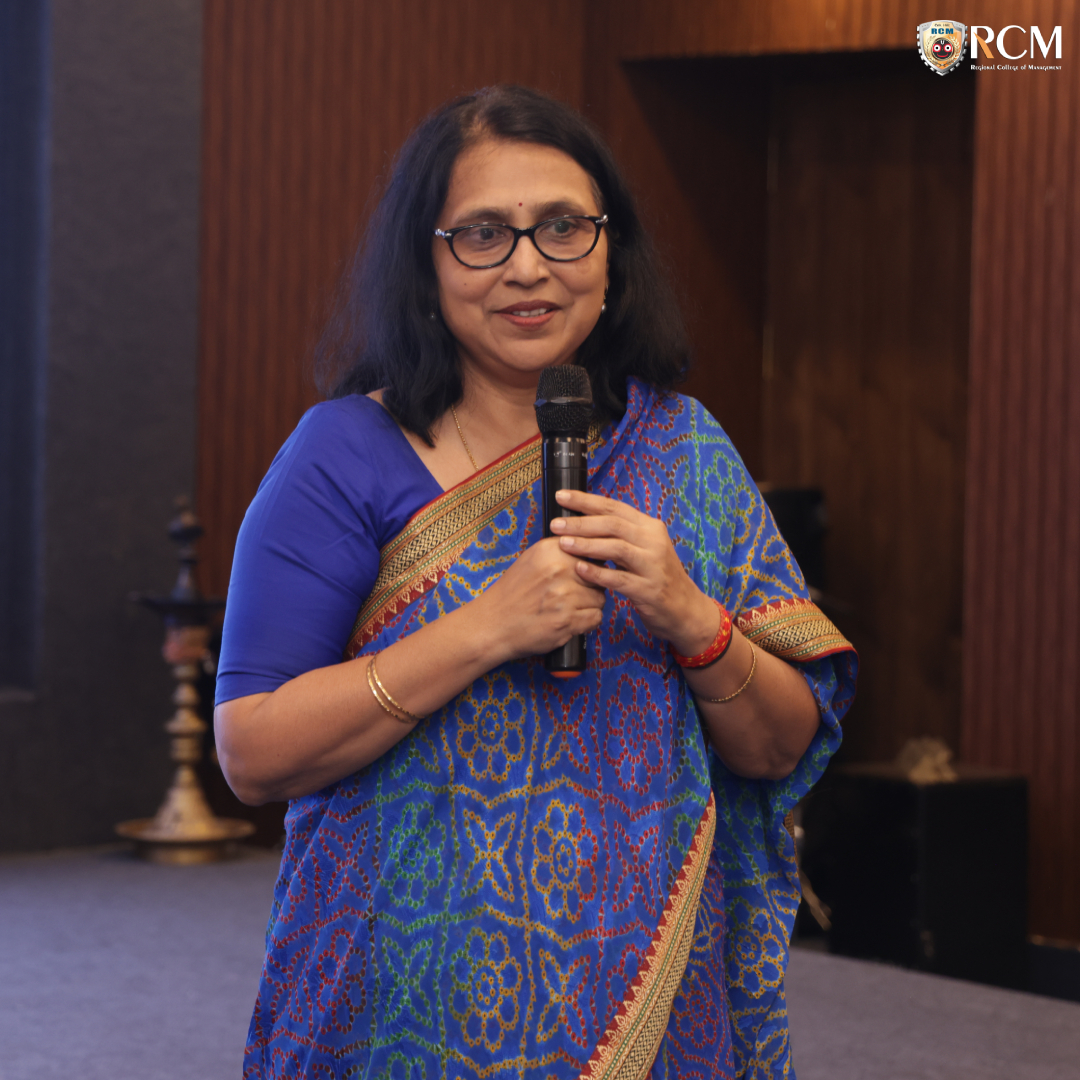
Dr. Shadha Padhi

Additional Director, RCM

Admissions 2026

Limited Seats Available for 2026 Enrollment!

Don’t miss your chance to secure a spot for 2026. Enquire today!

keep watching

Highlights from RCM Events

FAQ

AI in Education: Frequently Asked Questions

Q01What is AI in education according to RCM Bhubaneswar's FDP session?

At RCM Bhubaneswar’s Faculty Development Program, AI in education was framed as a force that automates routine tasks while demanding stronger content, context, and critical-thinking skills.

RCM Bhubaneswar’s session showed AI can compress report-writing and research tasks from days to minutes, freeing faculty time for inquiry-based, future-ready classroom engagement.
RCM Bhubaneswar’s FDP speaker Bobby Patnaik introduced the 5C1P framework — Content, Context, Clarity, Curiosity, Communication, and Positivity — for the AI-in-education era.
RCM Bhubaneswar’s session cited a real case where an AI-generated consulting report without domain expertise produced hallucinated citations, showing why human content mastery remains essential.
RCM Bhubaneswar’s faculty training emphasized inquiry-based, curiosity-driven questioning as key to preparing students for AI-integrated, future-ready classrooms.